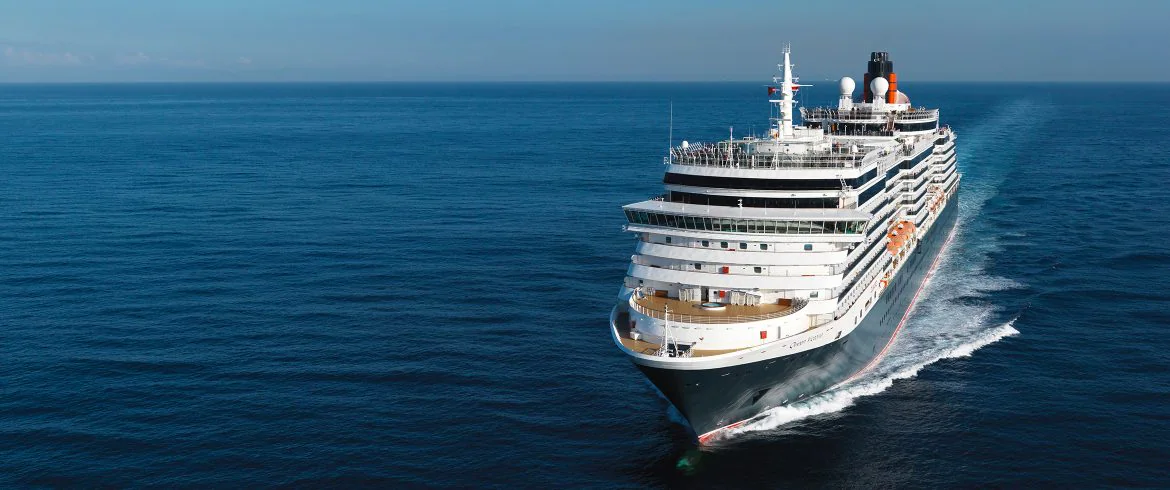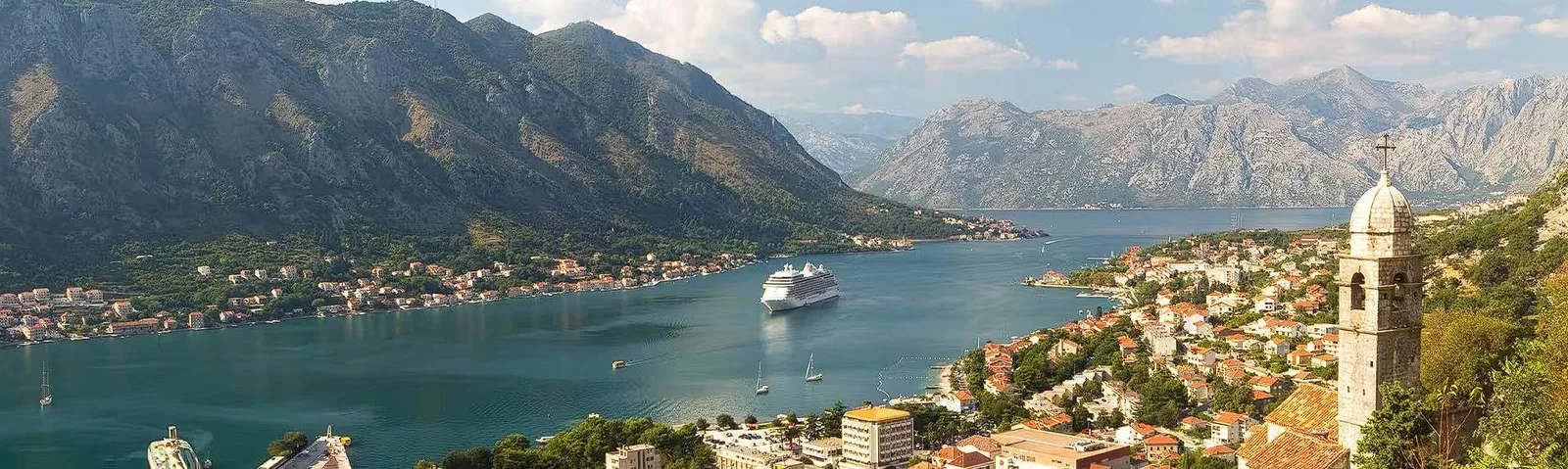
Oceania Cruises and Ponant are both popular with Australian travellers, but they solve completely different problems — one is the finest mid-size culinary cruise line at sea, the other a French luxury expedition specialist with Zodiac landings and an icebreaker. Jake Hower compares their inclusions, dining, fleet, and value for Australians.
| Oceania Cruises | Ponant | |
|---|---|---|
| Category | Luxury | Luxury / Expedition |
| Rating | ★★★★☆ | ★★★★★ |
| Fleet size | 8 ships | 13 ships |
| Ship size | Mid-size (1,000-2,500) | Small (under 500) |
| Destinations | Mediterranean, Asia, South Pacific, Caribbean | Antarctica, Mediterranean, Arctic, South Pacific |
| Dress code | Country club casual | Smart casual |
| Best for | Food-focused culturally curious cruisers | French-inspired luxury expedition travellers |
Oceania is the best value upper-premium line at sea — Jacques Pépin's culinary programme across up to ten dining venues, included speciality restaurants, and an approachable Country Club Casual atmosphere on mid-size ships carrying 684 to 1,250 guests. Ponant counters with genuine expedition capability across thirteen ships, an open bar with Henri Abelé champagne, Ducasse-trained cuisine, and access to destinations Oceania cannot reach — the Kimberley, Antarctica, the Geographic North Pole, and French Polynesia year-round. For Australians wanting culinary depth and classic itineraries at a competitive per-diem, choose Oceania. For Australians drawn to small-ship expedition cruising with French polish and remote destinations, choose Ponant.
The core difference
Oceania Cruises and Ponant are rarely considered direct competitors — and for good reason. They occupy fundamentally different spaces within luxury cruising, and the choice between them reveals not just preference but purpose.
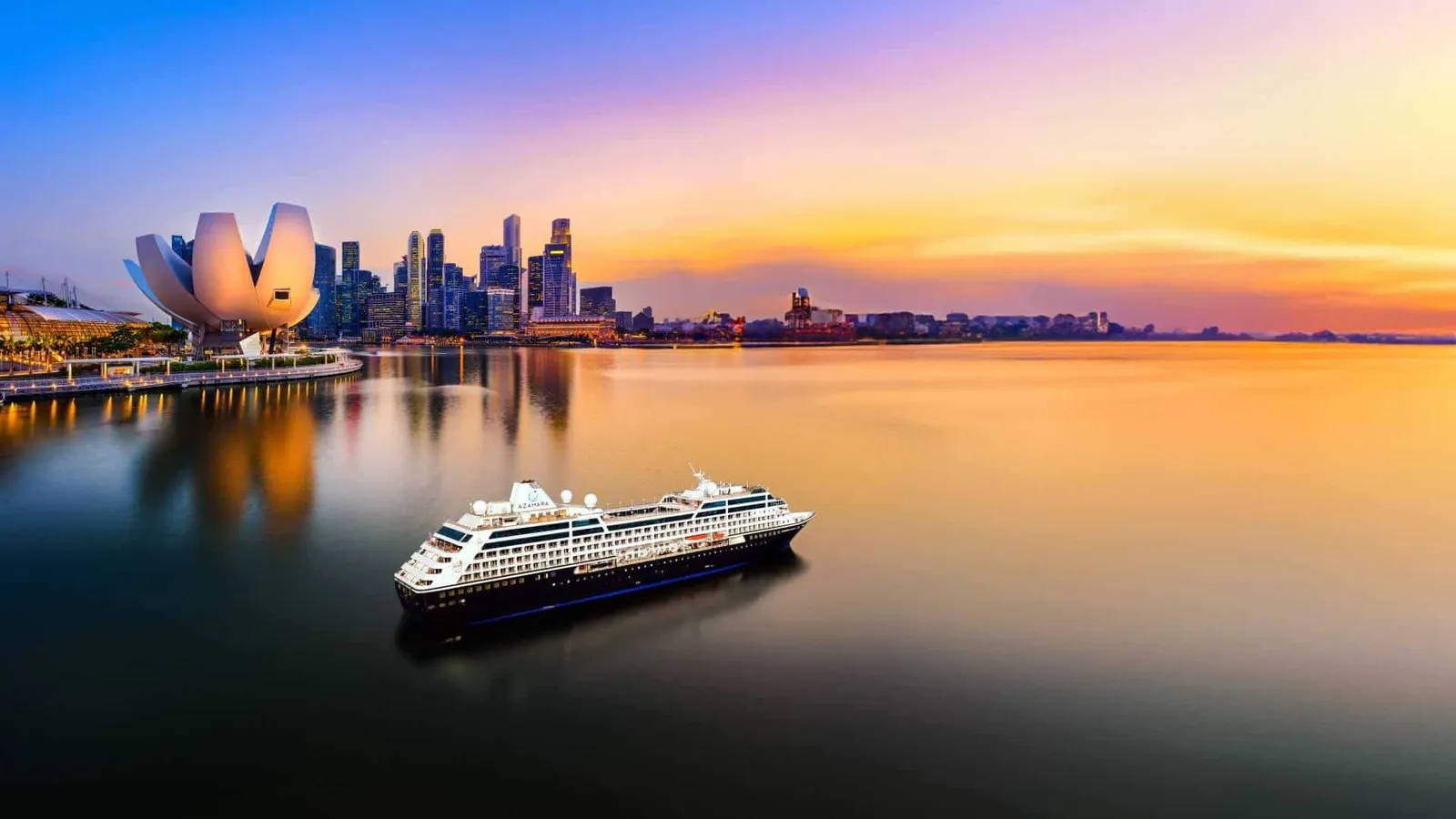
Oceania’s identity is culinary. The line’s trademarked claim to “The Finest Cuisine at Sea” is backed by Jacques Pépin — former personal chef to three French heads of state including Charles de Gaulle, author of thirty cookbooks, host of thirteen PBS television series, and Oceania’s Executive Culinary Director since 2003. On the O-class ships (Marina, Riviera, and the incoming Allura and Vista), guests choose from up to ten dining venues — Jacques (French bistro), Polo Grill (American steakhouse), Red Ginger (pan-Asian), Toscana (Italian), Aquamar Kitchen (wellness), and more — all included without surcharges. The mid-size format (684 to 1,250 guests) creates a relaxed, Country Club Casual atmosphere where jackets and ties are never required. Under Norwegian Cruise Line Holdings alongside Regent and Norwegian, Oceania operates four ships focused on the Mediterranean, Caribbean, Alaska, Asia, and increasingly Australian waters.
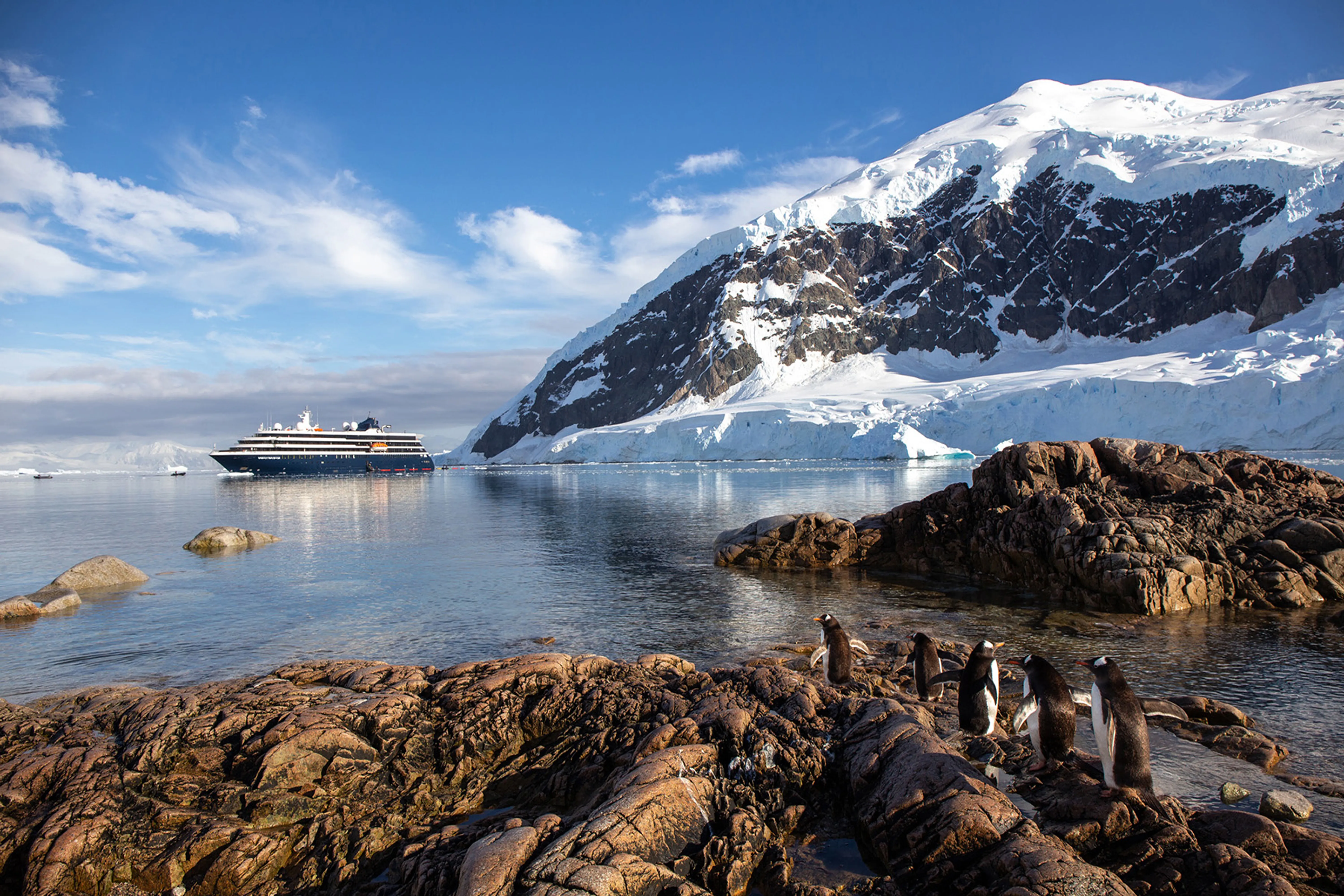
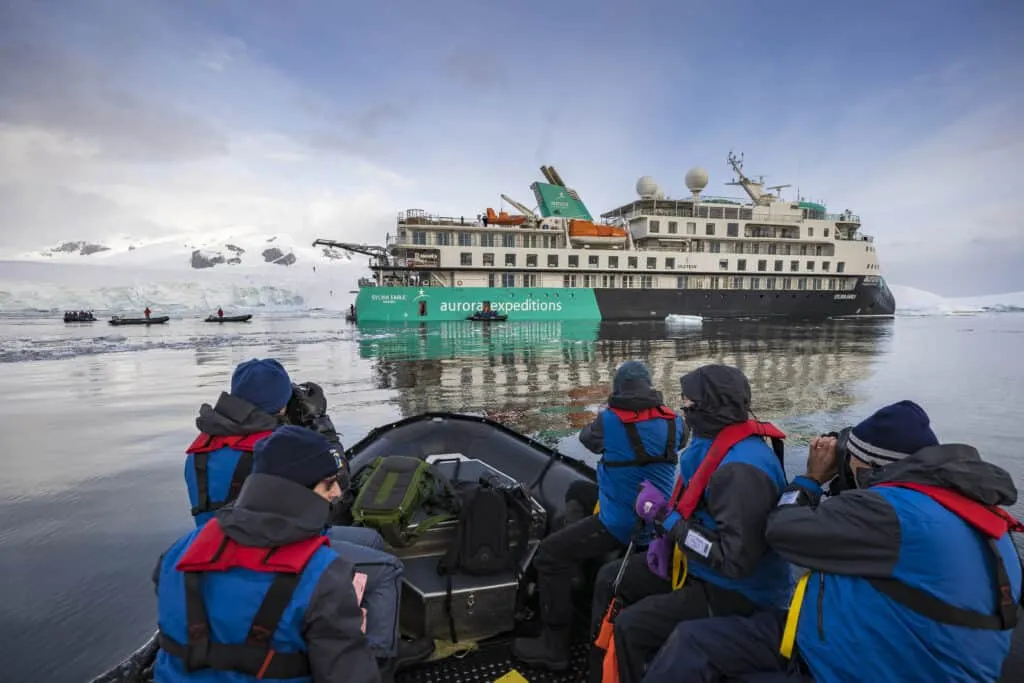
Ponant’s identity is expedition. Rebranded as Ponant Explorations Group in March 2025, the French line operates thirteen ships — from the 32-guest sailing yacht Le Ponant to the 245-guest Le Commandant Charcot, the only luxury icebreaker afloat with PC2 ice class capable of reaching the Geographic North Pole. Six Explorer-class ships carry Zodiac fleets and the Blue Eye underwater multi-sensory lounge. The Ducasse Conseil culinary partnership (since 2016) brings Michelin-star heritage to just two restaurants per ship. Owned by Groupe Artémis (the Pinault family investment holding that also controls Kering, Christie’s, and Château Latour), Ponant is unambiguously French — in language, culinary philosophy, and passenger mix.
For Australian travellers, the practical question is often straightforward. If you want classic ocean cruising with the widest restaurant choice at a competitive per-diem, Oceania delivers exceptional value. If you want to board a Zodiac, land on a beach with no pier, explore the Kimberley or Antarctica, or sail French Polynesia year-round — Ponant is the only choice from this pairing.
What is actually included
Both lines market inclusivity, but the specifics differ meaningfully — and the details matter when calculating total cost.
Oceania’s “Your World Included” programme (launched October 2024) covers all speciality restaurant dining without surcharges, shipboard gratuities, unlimited Wi-Fi, speciality coffees and non-alcoholic beverages, still and sparkling water, gourmet ice cream, laundry services, in-stateroom dining, and group fitness classes. From September 2025 bookings, guests choose one amenity: either complimentary wine and beer by the glass during lunch and dinner hours, or a shore excursion credit scaled by voyage length (USD $400 for nine days up to USD $1,200 for twenty-six or more days). If neither is selected, a non-use credit applies. Notably, premium spirits, cocktails, wines by the bottle, spa treatments, and shore excursions beyond any credit remain additional costs. La Reserve by Wine Spectator and the Privée Dom Pérignon experience (limited to eight guests per evening) carry surcharges.
Ponant’s inclusion model is simpler at the base fare level. The fare covers all dining, an open bar available at all hours (beer, wine, spirits, Henri Abelé Brut Champagne, coffee, and soft drinks), a daily-restocked minibar, unlimited Wi-Fi, and 24-hour room service. On expedition sailings — which includes the Kimberley, Antarctica, and French Polynesia — one guided excursion per port per day is included, covering Zodiac outings, shore landings, and expert-led activities. What Ponant does not include: gratuities (voluntary but suggested at approximately EUR 10–12 per person per day), shore excursions on non-expedition itineraries, spa treatments, and premium wines or spirits beyond the standard open bar. Flights are separate unless booked as part of a Fly, Stay & Cruise package.
The net effect for Australian travellers: Ponant’s open bar represents genuine value — champagne, spirits, and cocktails from morning to night without signing. Oceania’s included dining across ten restaurants and included gratuities are substantial. On expedition itineraries, Ponant’s daily included excursion adds significant value. On Mediterranean or Asian itineraries where both lines compete, Oceania’s lower base fare and broader dining inclusions often deliver better overall value for the per-diem paid.
Dining and culinary experience
Both lines boast genuine culinary pedigree — and both can credibly claim celebrity chef partnerships. The experience, however, is fundamentally different.
Oceania is a restaurant ship. On O-class vessels, guests choose nightly from Jacques (French bistro, named for Pépin), Polo Grill (premium American steakhouse), Red Ginger (pan-Asian, praised for its lobster tempura), Toscana (Italian heritage), Aquamar Kitchen (wellness-inspired with calorie-conscious and plant-forward menus), The Grand Dining Room (main restaurant with over 270 rotating recipes), Terrace Café (buffet that converts to Tuscan, Asian, or Middle Eastern themed evenings), and Waves Grill (casual poolside, transforming to a pizzeria at night). On R-class ships (Regatta, Insignia, Nautica, Sirena), the count drops to six venues but the quality holds. The Culinary Center on O-class ships offers hands-on cooking classes at eighteen individual workstations — a genuine professional teaching kitchen. Critically, every restaurant except La Reserve and Privée is included. The choice and variety are unmatched in the luxury segment.
Ponant is a French kitchen. The Ducasse Conseil partnership since 2016 focuses depth over breadth. On Explorer-class ships, Le Nautilus serves à la carte four-course dinners with amuse-bouche and regional French wines; Le Nemo (or Le Grill) offers poolside casual dining accommodating up to seventy guests. On Le Commandant Charcot, the flagship Nuna restaurant — named from the Inuit word for “Earth” — is widely cited as one of the finest restaurants at sea, with Bernardaud porcelain, Ligne Roset furniture, and menus that feature soft-boiled eggs with caviar, saffron fettuccine with seafood, and French cheeses rivalling any brasserie in Lyon. The bread and pastries are consistently described as boulangerie-quality. Pierre Hermé macarons and Kaviari caviar appear across the fleet.
The verdict is clear: Oceania delivers the widest variety of complimentary dining in the luxury segment. Ponant delivers the most authentically French culinary experience afloat, with wines and champagne included. For food-motivated travellers who want options every night, Oceania. For those who value a focused, wine-paired French dining experience, Ponant.
Suites and accommodation
This comparison is influenced heavily by the ships being compared — Oceania’s mid-size vessels offer substantially more space per cabin than Ponant’s deliberately compact expedition ships.
Oceania’s O-class ships (Marina, Riviera, Allura, Vista) offer Veranda staterooms from 282 to 291 square feet including a private veranda — generous for the segment. Penthouse Suites reach 440 square feet. The Owner’s Suites span approximately 2,000 square feet. On the smaller R-class ships (684 guests), staterooms are tighter at 165 to 216 square feet in standard categories, though still functional. All suites feature Prestige Tranquility Beds, Bulgari bath amenities, and twice-daily housekeeping. Butler service is available from Penthouse level upward.
Ponant’s Explorer-class cabins are designed for expedition, not space. The standard Deluxe Balcony stateroom is 161 square feet of interior space plus a 43-square-foot balcony — roughly 55 per cent of Oceania’s O-class equivalent. Prestige Suites offer 291 square feet. The Owner’s Suite tops out at 485 square feet of interior with a spectacular 323-square-foot private terrace and outdoor Jacuzzi. On Le Commandant Charcot, accommodation is more generous: Prestige Staterooms start at 300 square feet plus a 55-square-foot balcony, and the Owner’s Suite spans 1,240 square feet of interior plus a 2,000-square-foot terrace — genuinely spectacular. Duplex Suites on Charcot are two-level apartments with private dining rooms seating six.
The tradeoff is intentional. Ponant’s smaller cabins reflect a philosophy that the destination is the attraction — guests spend their days on Zodiacs, at shore landings, and in the Blue Eye lounge rather than in their stateroom. Oceania’s larger staterooms suit its classical cruising model where sea days, in-suite dining, and evening relaxation are central to the experience. Neither is wrong; they serve different purposes.
Pricing and value
The pricing gap between these lines is significant and reflects their different propositions — but it narrows substantially when comparing total cost rather than headline fares.
Oceania’s per-diem on classic itineraries runs approximately AUD $600 to $800 per person per night for entry-level Veranda staterooms on O-class ships. A 14-night Mediterranean voyage costs roughly AUD $12,000 to $16,000 per person including gratuities, all dining, and Wi-Fi. Add the beverage amenity (included wine and beer at meals) or shore excursion credit, and the value proposition strengthens further. Oceania is consistently described as offering “luxury dining at premium prices” — a positioning that resonates strongly with value-conscious Australian travellers.
Ponant’s per-diem varies enormously by ship and destination. Explorer-class expedition cruises average roughly AUD $900 to $1,500 per person per night. A 10-night Kimberley Fly, Stay & Cruise package starts from approximately AUD $14,850 per person including return flights from Australian capitals, two-night hotel stay, all meals, open bar, and daily guided excursions. Le Commandant Charcot polar voyages command a significant premium — the 2028 circumnavigation of Antarctica starts from USD $147,360 per person for sixty-two days. Mediterranean sailings on Explorer-class run approximately AUD $7,500 to $9,200 per person for shorter themed voyages.
For a direct Mediterranean comparison: a 10-night Oceania voyage in a Veranda stateroom costs roughly AUD $8,000 to $10,000 per person. A comparable Ponant Explorer-class sailing costs roughly AUD $9,000 to $15,000 per person. Ponant’s open bar inclusion partially closes the gap — budget approximately AUD $1,500 to $2,500 per couple for drinks on Oceania if the beverage amenity is not selected. The remaining premium buys a much smaller ship (184 versus 1,250 guests), an intimate atmosphere, and access to ports that larger ships cannot reach.
For expedition itineraries — the Kimberley, Antarctica, French Polynesia — no Oceania comparison exists. Ponant operates in a category of one from this pairing.
Spa and wellness
Both lines offer spa facilities, but at different scales reflecting their ship sizes and philosophies.
Oceania’s Canyon Ranch SpaClub operates across the fleet in partnership with the renowned Tucson-based wellness brand. On O-class ships, the spa spans approximately 5,000 square feet with treatment rooms, a thalassotherapy pool, an aromatic steam room, a Finnish sauna, and a relaxation lounge. The fitness centre features Technogym equipment with panoramic ocean views. Signature treatments include the Canyon Ranch Intensive Massage (80 minutes) and Elemis facial therapies. The partnership brings onshore Canyon Ranch expertise to sea — health consultations, nutrition counselling, and fitness assessments are available alongside standard spa services. A dedicated Aquamar Kitchen restaurant serves spa-inspired cuisine, extending the wellness philosophy into dining.
Ponant’s spa offering varies by ship. On Explorer-class vessels, compact spas operated by Sothys or Clarins offer massage cabins, a hammam (Turkish bath), and a fitness centre. The highlight is the Blue Eye underwater multi-sensory lounge — not a spa in the traditional sense, but a unique wellness-adjacent experience with two whale-eye-shaped glass portholes below the waterline, hydrophones capturing ocean acoustics, and Body Listening Sofas that vibrate with underwater sounds. On Le Commandant Charcot, the Nuan Wellness Lounge features Biologique Recherche treatments, three spa cabins, the Ikuma sauna, the Siku snow room, and — most spectacularly — the Blue Lagoon heated outdoor pool (27–37°C) where guests swim surrounded by polar ice. An indoor saltwater pool with counter-current swim and floor-to-ceiling windows completes the facility.
The difference is clear. Oceania offers the more comprehensive traditional spa in partnership with an established wellness brand. Ponant offers experiential wellness — swimming in a heated pool surrounded by Antarctic ice, listening to whale song through the hull — that no conventional spa can replicate.
Entertainment and enrichment
Neither line is a floating theatre, but they approach the evening and enrichment differently.
Oceania’s enrichment programme centres on culinary education. The Culinary Center on O-class ships offers hands-on cooking classes at eighteen individual workstations — a professional teaching kitchen where guests learn regional cuisines relevant to the itinerary. Guest lecturers cover history, science, and culture. The Martini Bar hosts live piano and cocktail gatherings. The evening atmosphere is quiet, social, and unhurried — a jazz trio, a cocktail, conversation. There are no production shows, no theatre, no cabaret cast. The dress code is Country Club Casual at all times — no formal nights, ever. Some travellers find the evenings understated; others appreciate the absence of forced entertainment.
Ponant’s enrichment programme is expedition-focused. Onboard naturalists, ornithologists, marine biologists, and historians deliver daily briefings and lectures before each landing. National Geographic Expeditions partnerships (since 2018) place National Geographic experts and photographers onboard select sailings. Smithsonian Journeys collaborations add two Smithsonian experts per voyage on family-oriented Mediterranean and Great Lakes itineraries. The Explorers Club partnership (expanded November 2025) brings speakers including mountaineer Peter Hillary and marine scientist Diego Cardenosa. Evenings feature a musical duo or small performance in the lounge, cocktails, and the signature Soirée Blanche (White Party) on warm-climate sailings — an all-white dress event with music and dancing on the outer decks. The dress code is “Casual Chic” most evenings with one or two gala evenings per sailing requiring cocktail dress or dark suit.
The distinction is philosophical. Oceania makes the kitchen the stage. Ponant makes the destination the curriculum. Neither produces Broadway-calibre shows — if evening spectacle matters, neither line is the right choice.
Fleet and destination coverage
The fleet comparison reveals two fundamentally different strategies — Oceania’s focus on a compact, culinarily excellent mid-size fleet versus Ponant’s broad expedition armada.
Oceania operates four ships (five with Allura arriving in 2025): Marina (2011, 1,250 guests), Riviera (2012, 1,250 guests), Regatta (1998, 684 guests), and Insignia (1998, 684 guests). The O-class ships are the flagships with the full ten-venue dining programme. The R-class ships are more intimate with fewer restaurants but charm and character from decades of refined service. All four ships focus on classic ocean itineraries — no expedition capability, no Zodiacs, no ice-class ratings. Oceania had 236 Mediterranean cruises in its 2026 programme alone, making it one of the most prolific luxury lines in Europe.
Ponant operates thirteen ships across five classes. The fleet ranges from Le Ponant (32 guests, three-masted sailing yacht) through four Sisterships (264 guests each), six Explorer-class vessels (184 guests each), and Le Commandant Charcot (245 guests, PC2 icebreaker). The Paul Gauguin (332 guests) operates year-round in French Polynesia. Recent acquisitions include majority ownership of Aqua Expeditions (five river and ocean vessels in the Amazon, Mekong, Galapagos, and Indonesia). Fleet breadth means Ponant deploys simultaneously across the Mediterranean, Kimberley, French Polynesia, both polar regions, subantarctic islands, Asia, the Great Lakes, and Papua New Guinea.
For Australian travellers, Ponant’s fleet offers far more itinerary flexibility — thirteen ships across a dozen regions simultaneously versus Oceania’s four ships concentrated in major cruise markets. Oceania counters with the reliability of a focused fleet where every ship delivers a consistent product.
Where each line excels
Oceania excels in:
- Mediterranean depth. Over 230 cruises per season across the region, with itineraries from seven to fifty-six nights and frequent overnight port stays in Barcelona, Istanbul, and Monte Carlo. The mid-size O-class ships access most major and secondary ports.
- Culinary breadth. Ten complimentary dining venues spanning more cuisines than any other luxury line. The Culinary Center’s professional teaching kitchen has no equivalent on Ponant.
- Classic ocean cruising. If your ideal holiday involves sea days, multiple restaurant choices, in-stateroom dining, and relaxed evenings without expedition briefings, Oceania delivers the definitive upper-premium experience.
- Value positioning. The lowest per-diem of any luxury line with this calibre of dining — consistently cited as the best value in the segment.
Ponant excels in:
- Expedition access. Thirteen ships reaching the Kimberley, Antarctica, the Arctic, the Geographic North Pole, subantarctic islands, Papua New Guinea, French Polynesia, and the Indonesian archipelago. No Oceania ship can visit any of these destinations.
- French Polynesia. Paul Gauguin has operated year-round from Papeete since 1998. Le Jacques Cartier joins from the 2026–2027 season, creating a dual-ship programme across six archipelagos including the rarely visited Gambier, Austral, and Pitcairn Islands.
- The Kimberley. Sixteen sailings for the 2026 season with a new West Coast Odyssey (Broome to Fremantle) — one of the most comprehensive Kimberley programmes of any cruise line.
- Polar capability. Le Commandant Charcot is the only luxury ship to have reached the Geographic North Pole and the first to visit the northern pole of inaccessibility. The 2028 circumnavigation of Antarctica will be a world first.
Standout itineraries for Australian travellers
Oceania
Riviera: Sydney to Bali (14 nights, February 2026) — Oceania’s Australian debut sailing. Departs Sydney via Brisbane, Cairns, Cooktown, and Darwin to Bali. No international flights needed for the departure. Ten dining venues, Country Club Casual atmosphere, and the Jacques Pépin culinary programme throughout.
Regatta: Polynesian Dreams (15 nights, Honolulu to Papeete) — A rare luxury line deployment to the South Pacific. The intimate R-class format (684 guests) suits French Polynesia’s smaller harbours. Air New Zealand connects Australian capitals to Honolulu via Auckland.
Riviera: Mediterranean Grand Voyage (28–42 nights, multiple segments combinable) — The best Oceania experience for food-motivated Australians. Sea days between Mediterranean ports allow proper exploration of all ten restaurants. Included Wi-Fi, gratuities, and laundry make extended voyages financially practical.
Ponant
Le Jacques Cartier: Kimberley (10 nights, May–September 2026, Broome to Darwin) — Sixteen sailings with Fly, Stay & Cruise packages from approximately AUD $14,850 including return flights from five Australian capitals, hotel, and all-inclusive expedition cruise. One guided excursion per port per day included. King George Falls, Montgomery Reef, and Indigenous cultural encounters.
Le Jacques Cartier: French Polynesia (7–14 nights, roundtrip Papeete, September 2026–March 2027) — Sixty-six departures across the Society Islands, Tuamotu, Marquesas, Cook Islands, Fiji, and Tonga. Air Tahiti Nui operates direct Sydney–Papeete flights (8 hours). Blue Eye underwater lounge and Zodiac excursions included.
Le Commandant Charcot: Antarctica Circumnavigation (62 nights, departing Ushuaia 11 January 2028) — The first-ever full circumnavigation of Antarctica. From USD $147,360 per person. For the most ambitious Australian polar traveller, this is the defining voyage of the decade.
Le Soleal: West Coast Odyssey (10 nights, Broome to Fremantle, July–August 2026) — A brand-new itinerary exploring Shark Bay (UNESCO), Jurien Bay, the Abrolhos Islands, Montebello Islands, and Murujuga National Park. Domestic flights only.
Ship-by-ship recommendations
Oceania
Riviera or Marina (1,250 guests, 2012/2011) — The flagship experience with all ten dining venues, the Culinary Center, Canyon Ranch SpaClub, and the La Reserve wine experience. Start here for the definitive Oceania voyage. Riviera is deployed to Australian waters for 2025–2026 — the easiest entry point for Australians.
Regatta (684 guests, 1998) — The most intimate Oceania ship. Fewer dining venues than O-class but a devoted following. Best suited to travellers who want a smaller ship with Oceania’s culinary standards. The French Polynesia deployment suits the format perfectly.
Allura (approximately 1,200 guests, arriving 2025) — The newest ship, bringing the O-class experience with potential design updates. Worth watching for introductory pricing.
Ponant
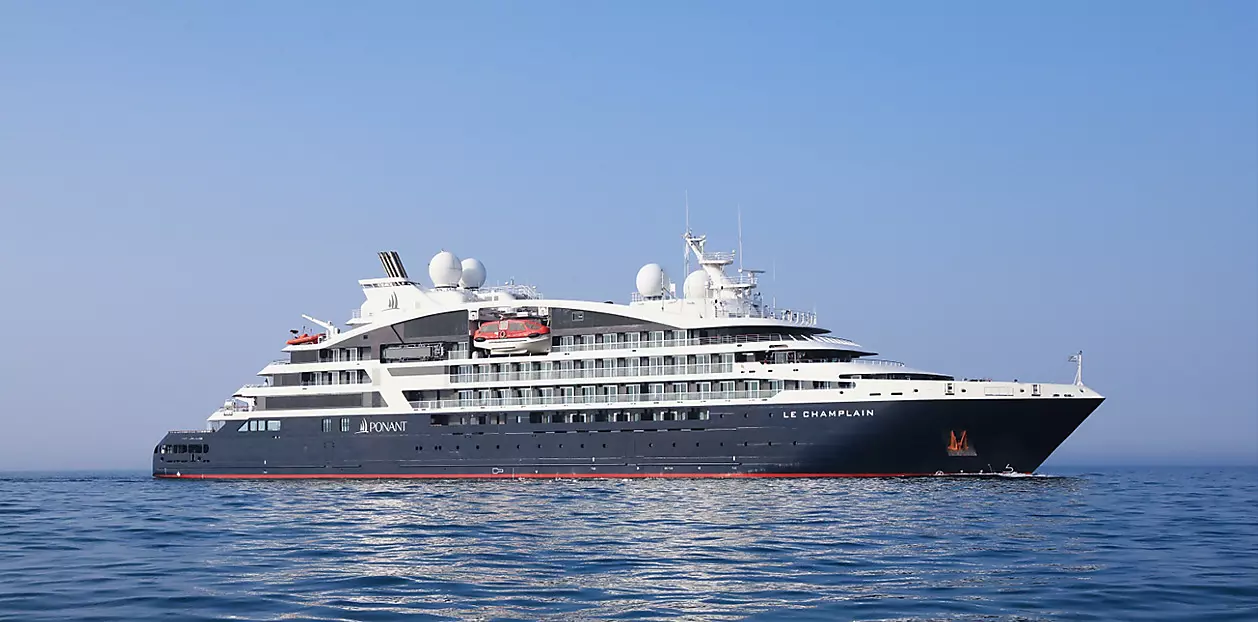
Le Jacques Cartier or Le Champlain (184 guests, 2020/2018) — Explorer-class ships with the Blue Eye underwater lounge, Zodiac fleet, and Ducasse-trained cuisine. Le Jacques Cartier is deployed to both the Kimberley and French Polynesia — the most versatile ship for Australian travellers.
Le Commandant Charcot (245 guests, 2021) — For serious polar expedition only. PC2 ice class, LNG-electric hybrid propulsion, and the Nuna restaurant (Ducasse’s first restaurant at sea). Commands a significant premium but delivers experiences available on no other passenger ship.
Le Soleal or Le Lyrial (264 guests, 2013/2015) — Sistership-class vessels that are the Kimberley workhorses. Slightly larger and older than Explorer-class but proven expedition performers with ice-strengthened hulls.
Paul Gauguin (332 guests, 1998) — A separate experience entirely, operating year-round in French Polynesia with Tahitian cultural hosts. Not an expedition ship but purpose-built for the region. Choose for the most immersive Pacific cruise available.
For Australian travellers specifically
Both lines maintain Australian offices and court the Australian market actively, but the depth of presence differs.
Ponant’s Australian operation is the more established. The North Sydney office (1300 737 178) was built under the leadership of Sarina Bratton AM — described as “Australia’s First Lady of Cruising” — who grew the APAC operation from less than one per cent of global revenue to twenty per cent over nearly a decade. Current CEO Asia Pacific Deb Corbett serves on the CLIA Australasia Executive Committee. The Kimberley is Ponant’s second most popular cruise region for Australian guests. Fly, Stay & Cruise packages from five Australian capitals simplify booking. Ponant runs Discovery Sessions in Australian cities with exclusive cruise offers and flight credits for Australian and New Zealand travellers. The 2026 West Coast Odyssey (Broome to Fremantle) is a uniquely Australian product with no international equivalent.
Oceania’s Australian presence operates through the Norwegian Cruise Line Holdings Sydney office (Level 12, 44 Market Street, Sydney NSW 2000; 1300 355 200). Riviera’s Australian debut for 2025–2026 signals growing commitment to the market, with Sydney as the primary embarkation port and itineraries to New Zealand, Bali, and the South Pacific. Oceania’s strength for Australian long-haul travellers is its Mediterranean programme — over 230 cruises per season, accessible via Qantas, Emirates, or Singapore Airlines from Australian gateways.
The loyalty pathway matters differently. Oceania’s Club integrates with Norwegian Cruise Line Holdings — status earned on Norwegian or Regent carries to Oceania. Ponant’s Yacht Club is lifetime-status with no requalification, and the December 2025 cross-brand match extends status across Ponant Explorations, Paul Gauguin, and Aqua Expeditions. For Australians building toward ultra-luxury, Oceania’s pathway leads to Regent Seven Seas (same parent company); Ponant’s leads to deeper expedition.
The onboard atmosphere
These two lines feel as different as their itineraries suggest — and choosing correctly on atmosphere matters as much as choosing correctly on destination.
Oceania’s atmosphere is the Country Club. The passenger base averages 55–70, predominantly American and Canadian with growing Australian representation. The dress code is permanently Country Club Casual — slacks, polo shirts, sundresses. No formal nights, no jackets required, no gala evenings. The evening energy is conversational and quiet: a jazz trio in the Martini Bar, aperitifs in the library, a lingering dinner in Jacques. Service is warm and efficient rather than ceremonial. The mid-size format (684 to 1,250 guests) means you see familiar faces without feeling crowded. There is a casino — unusual for a luxury line. The cultural vibe is comfortable, American, and food-obsessed.
Ponant’s atmosphere is the French yacht. With never more than 264 guests on the main fleet, the intimacy is pronounced — the Captain and travel ambassador are visible daily, often dining with guests. The passenger mix is approximately fifty per cent French, followed by Australians, Europeans, and a smaller North American contingent. Announcements are delivered in French first, then English — and some guests report that the French version is longer and more detailed. The dress code is “Casual Chic” with one or two gala evenings per sailing where cocktail dress or dark suit is recommended. The Soirée Blanche (White Party) in warm climates is a signature event. Evenings are intimate rather than programmed — conversation over champagne, a musical duo in the lounge, stargazing from the open deck. For English-speaking Australians, the French language dynamic is the single most discussed aspect of the Ponant experience.
The bottom line
Oceania and Ponant sit in different market segments, serve different traveller motivations, and rarely compete head-to-head — but for Australians deciding between them, the choice clarifies around a single question: what kind of holiday do you want?
Choose Oceania for the finest culinary cruise experience at a competitive per-diem. Choose it for ten dining venues, a professional cooking school, classic Mediterranean and world itineraries, and a relaxed English-speaking atmosphere where the food is the event. Choose it for larger staterooms, the Canyon Ranch spa partnership, and the straightforward value of included dining and gratuities. Accept that the fleet has no expedition capability, that alcoholic drinks require the beverage amenity selection, and that the evening entertainment is deliberately understated.
Choose Ponant for genuine expedition access — the Kimberley from Broome, Antarctica from Ushuaia, the Geographic North Pole from Longyearbyen, and French Polynesia year-round from Papeete. Choose it for intimate French culinary excellence, an included open bar with champagne, and the Blue Eye underwater lounge. Choose it for thirteen ships reaching destinations that no Oceania vessel can approach. Accept that cabins are smaller, per-diems are higher, the passenger mix is predominantly French, and the evening atmosphere is intimate rather than varied.
For most Australian travellers, these lines complement rather than compete. An Oceania Mediterranean followed by a Ponant Kimberley is not an unusual combination — and it delivers the best of both worlds.