HX Expeditions and Swan Hellenic both operate purpose-built expedition ships in polar and remote waters — but they represent fundamentally different philosophies of what expedition cruising should be. Jake Hower compares their ships, ice class, landing logistics, enrichment programmes, inclusions, and value for Australian travellers choosing between Norway's accessible adventure brand and Britain's cultural expedition pioneer.
| HX Expeditions | Swan Hellenic | |
|---|---|---|
| Category | Expedition | Expedition |
| Rating | ★★★★☆ | ★★★★☆ |
| Fleet size | 10 ships | 3 ships |
| Ship size | Small (under 1,000) | Small (under 200) |
| Destinations | Norwegian Coast, Arctic, Antarctica, Greenland | Polar, Mediterranean, South America, Asia |
| Dress code | Relaxed | Relaxed |
| Best for | Coastal and expedition nature lovers | Cultural expedition and enrichment travellers |
HX Expeditions is the accessible-price polar specialist — five ships including the world's first hybrid battery-powered expedition vessels, the largest Antarctic programme by number of departures, an all-inclusive fare since November 2024, and a science-driven citizen programme with the University of Tasmania. Swan Hellenic counters with the newest purpose-built expedition fleet in the market, ships small enough that every passenger lands every time, PC5 ice class on two of three vessels, a SETI Institute partnership bringing space science to sea, the JRE Maris culinary programme, and an Illy espresso machine and electric fireplace in every cabin from the entry grade up. Choose HX when you want the widest Antarctic itinerary selection, hybrid propulsion, the most departures to choose from, and a lower entry price. Choose Swan Hellenic when you want a smaller ship where nobody waits, stronger ice capability, deeper cultural and intellectual enrichment, and a more refined all-inclusive experience at a boutique scale.
The core difference
HX Expeditions and Swan Hellenic sit at the same price neighbourhood on the expedition cruise spectrum — neither is ultra-luxury, neither is budget — but they represent fundamentally different answers to the question of what an expedition cruise should deliver.
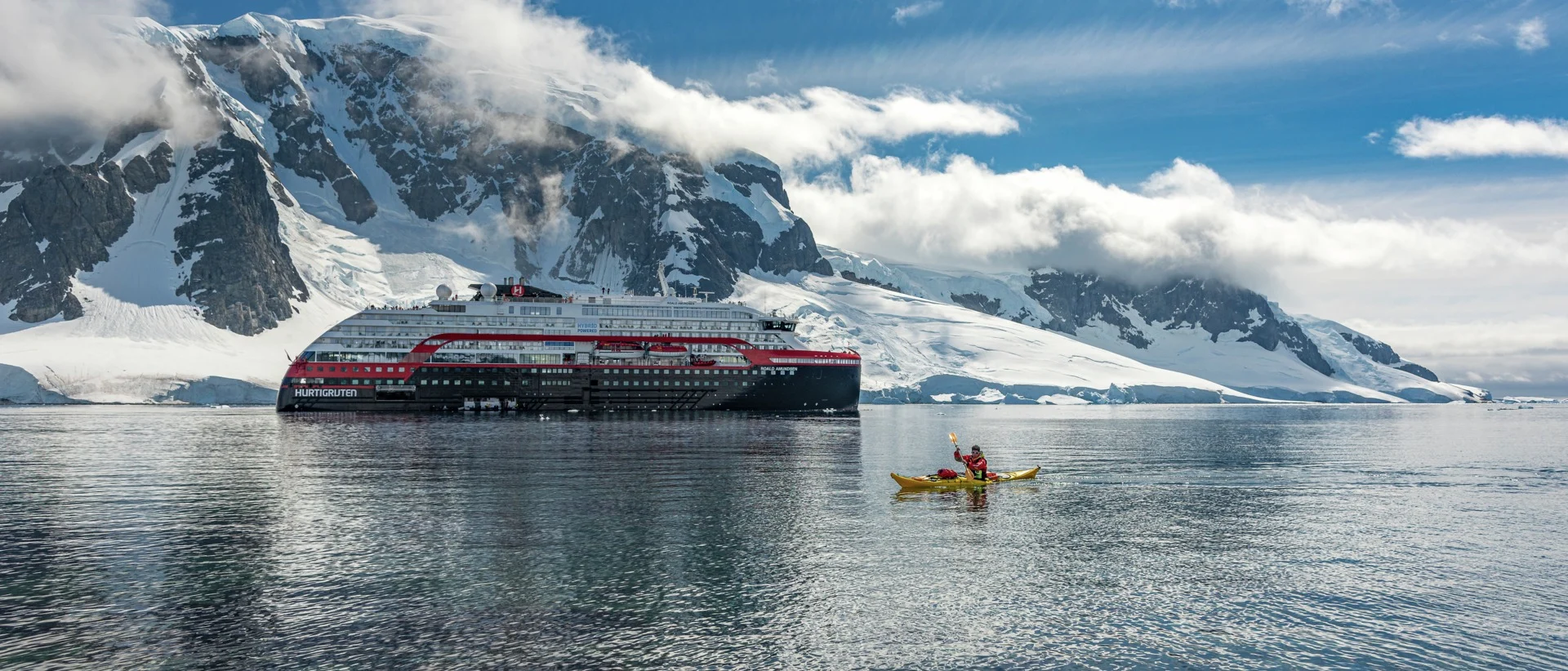
HX Expeditions is the Norwegian-heritage, science-driven, accessible adventure brand. Tracing its lineage to 1893 and Hurtigruten’s coastal steamships, HX launched purpose-built expedition cruising with MS Fram in 2007 and introduced the world’s first hybrid battery-powered cruise ships in 2019. Now operating under new ownership following a formal separation from Hurtigruten in early 2025, HX deploys five ships across both polar regions, the Galapagos, West Africa, and Alaska. The flagship programme is Antarctica — approximately 50 departures per season, the largest of any expedition operator. The defining proposition is scale, accessibility, and science: hybrid propulsion, Starlink Wi-Fi, a University of Tasmania partnership, Blueye underwater drones, an all-inclusive fare covering drinks, gratuities, and activities, and entry-level pricing that makes Antarctica achievable for a broader audience than the ultra-luxury expedition lines allow. With the hybrid ships carrying approximately 500 passengers in polar waters, HX delivers the expedition experience at a scale no other operator attempts — with all the advantages and compromises that scale entails.
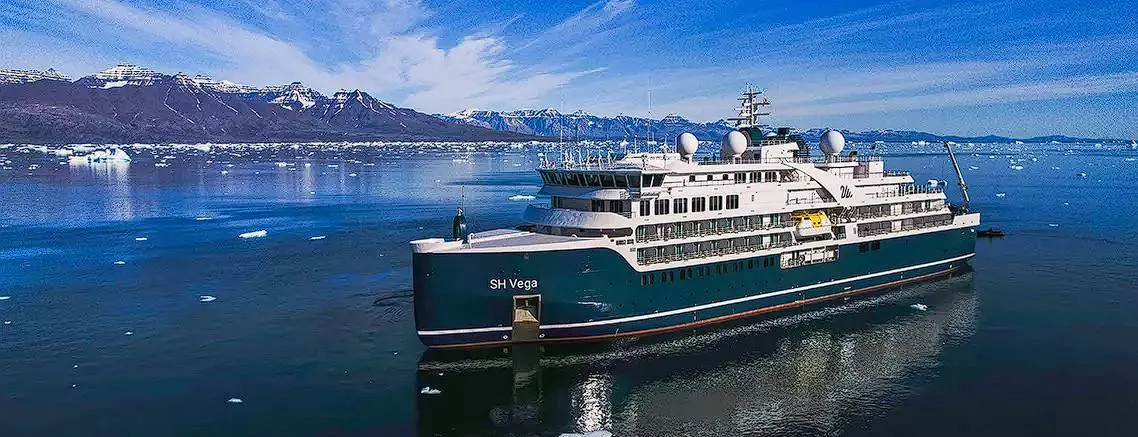
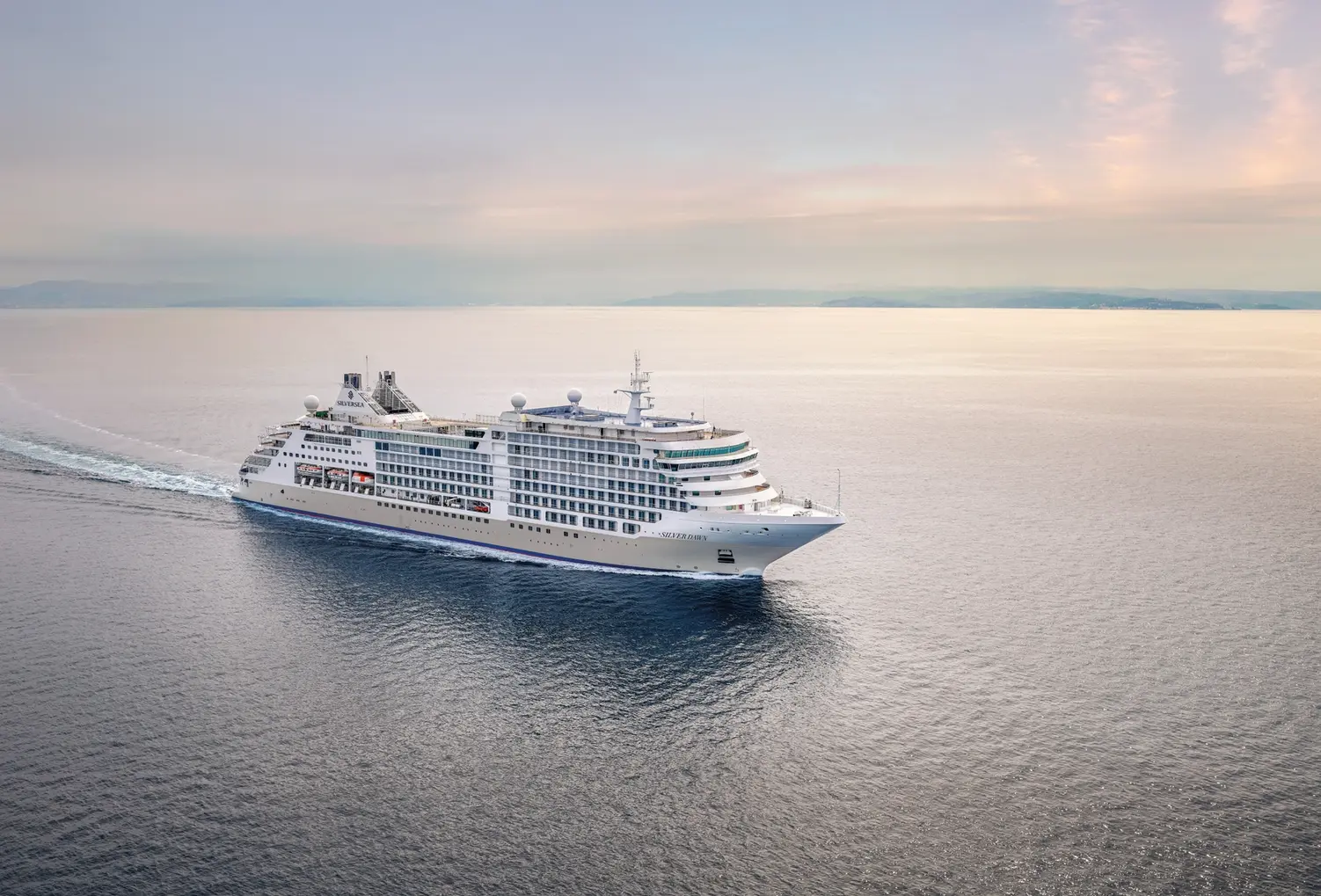
Swan Hellenic is the British-heritage, cultural expedition brand. Founded in 1954 when Swan’s Tours carried members of the Hellenic Society to explore ancient Greek sites in the Aegean with onboard academic lecturers, Swan Hellenic invented the concept of cultural cruising. After decades of ownership changes — from Charles Forte to P&O to Carnival to bankruptcy to G Adventures to dormancy — CEO Andrea Zito led a private investment group to acquire the brand in 2020 and commissioned three purpose-built expedition ships from Helsinki Shipyard. SH Minerva (2021), SH Vega (2022), and SH Diana (2023) now form the newest expedition fleet in the market. All three carry fewer than 200 passengers. Two hold PC5 ice class — among the highest ratings available. The defining proposition is intimacy, intellectual depth, and cultural context: a SETI Institute partnership for space science at sea, Oxford professors as guest lecturers, a JRE-Jeunes Restaurateurs culinary programme, an Illy espresso machine and faux holographic fireplace in every cabin, and a 70-year heritage of combining expedition exploration with the question of why a destination matters — not just what you see when you arrive.
For Australian travellers weighing these two lines, the choice comes down to expedition philosophy. HX offers the widest Antarctic programme, the most departure dates to choose from, hybrid-powered ships with genuine sustainability credentials, and an entry price that sits several thousand dollars below Swan Hellenic’s per diem. Swan Hellenic offers ships small enough that every single passenger lands every time, stronger ice capability, a materially better guide ratio, deeper cultural and intellectual enrichment, and a more refined all-inclusive experience delivered at boutique scale. Both will get you to Antarctica. The question is whether you want the democratic access of a large programme or the curated intimacy of a small fleet — and whether the enrichment you seek is marine science or the intersection of culture, history, and the cosmos.
Expedition team and guides
The quality and ratio of the expedition team is the single most consequential variable in expedition cruising — more important than the ship, the cabin, or the wine list. Both HX and Swan Hellenic invest in multi-disciplinary teams, but their structures and ratios differ substantially.
HX’s expedition team comprises marine biologists, wildlife biologists, ornithologists, glaciologists, oceanographers, social anthropologists, archaeologists, palaeontologists, historians, photographers, and cultural interpreters. Each voyage carries a team tailored to the itinerary. On the hybrid ships — MS Roald Amundsen and MS Fridtjof Nansen, carrying approximately 500 passengers in polar waters — HX deploys an estimated 15 to 20 expedition team members, yielding a guide-to-guest ratio of approximately 1:25 to 1:30. On the smaller MS Fram (200 polar passengers) and MS Spitsbergen (150 expedition mode), ratios improve to perhaps 1:15 to 1:20. HX operates an in-house polar guide training academy that won the Princess Royal Training Award in 2024. Tudor Morgan, one of HX’s senior expedition leaders, served as IAATO Chair in 2022. Niels Sanimuinaq Rasmussen, a Greenlandic Inuit cultural interpreter and Master of Ice Camp, is unique to HX — no other expedition line offers this level of Indigenous Arctic representation. HX also provides a professional photographer on each expedition and includes a complimentary digital photo album in the fare. The expedition team is consistently praised in reviews as knowledgeable, passionate, and engaging.
Swan Hellenic’s expedition team carries 12 to 15 members per ship, drawn from geologists, ornithologists, marine biologists, naturalists, historians, archaeologists, botanists, photographers, polar meteorologists, and activity leaders. With typical sailing numbers of 100 to 150 guests (ships often operate below maximum capacity), this yields a guide-to-guest ratio of approximately 1:10 to 1:12 — roughly two to three times better than HX’s hybrid ships. What distinguishes Swan Hellenic’s team composition is the deliberate inclusion of historians, archaeologists, and cultural interpreters — reflecting the brand’s 70-year heritage as a cultural cruise line. Even on polar expeditions, the team contextualises every destination with historical depth: Shackleton, Scott, the whaling era, the geopolitics of Antarctic sovereignty. On Mediterranean and Asia-Pacific voyages, the team shifts to emphasise archaeology, regional history, and anthropology. Guest lecturers — professors from Oxford and other leading universities, published authors, and specialist academics — sail on every voyage. These are not background talks between activities; the lecture programme is a core part of the daily experience and a primary reason guests choose Swan Hellenic.
The SETI Institute partnership elevates Swan Hellenic’s enrichment further. On nine designated “Explore Space at Sea” voyages across the 2025-2026 programme, SETI Institute scientists sail onboard, delivering lectures on astronomy, astrophysics, astrobiology, and the search for extraterrestrial life. An advanced telescope is installed for guided stargazing sessions. Guests participate in active citizen science research. No other expedition cruise line offers anything comparable — the partnership bridges exploration on Earth with exploration of the cosmos.
The practical difference in guide ratios becomes tangible on shore landings. On an HX hybrid ship, your Zodiac group might include 12 to 16 passengers with one guide shared among a rotation of hundreds. On Swan Hellenic, the same Zodiac group has one guide, but your group is part of a total landing party of 120 to 150 — everyone ashore at once, with expedition staff distributed throughout. The smaller total group means more personal interaction with guides, more flexibility to linger at wildlife colonies, and less of the managed-rotation feel that larger ships inevitably produce.
Ships and expedition hardware
The hardware comparison between HX and Swan Hellenic reveals two fundamentally different approaches to expedition ship design — one built for scale and sustainability, the other built for intimacy and ice capability.
Passenger capacity and IAATO implications: This is the most consequential difference. HX’s hybrid ships — MS Roald Amundsen and MS Fridtjof Nansen — carry approximately 500 passengers in polar waters, placing them in IAATO Category C2. Under IAATO regulations, only 100 passengers may be ashore at any one time. This means HX must rotate five groups of approximately 100 passengers each, with each group getting perhaps 60 to 90 minutes ashore before the next rotation begins. The logistics are well-managed — reviewers describe HX’s landing operations as running “like a military operation” — but the reality is that 500-passenger ships spend more time moving people on and off Zodiacs than actually exploring. HX’s smaller vessels improve the equation: MS Fram at 200 polar passengers and MS Spitsbergen at 150 fall within Category C1, where all passengers can land, though two quick rotations may still be needed on Fram.
Swan Hellenic’s entire fleet sits within IAATO Category C1. SH Minerva and SH Vega carry 152 passengers; SH Diana carries 192. All three are under the 200-passenger threshold. Every single guest goes ashore simultaneously — no rotation, no waiting, no abbreviated landing windows. This is a structural advantage that cannot be overstated. When a leopard seal hauls out onto an ice floe or a whale breaches in the bay, every Swan Hellenic passenger is there to see it. On an HX hybrid ship, four-fifths of the guests are back on the ship watching from the observation deck, waiting their turn.
Ice class — Swan Hellenic’s engineering edge: SH Minerva and SH Vega hold PC5 ice class, meaning they are rated for year-round operation in medium first-year ice that may include old ice inclusions. This is among the highest ratings in the expedition cruise market — only Ponant’s Le Commandant Charcot (PC2) is materially higher among passenger vessels. SH Diana holds PC6, the standard for modern expedition cruise ships. HX’s hybrid ships also hold PC6. MS Fram carries a Finnish-Swedish 1B rating (roughly equivalent to PC5), which gives it genuine ice capability. MS Spitsbergen is described as ice-strengthened — a lower specification. For standard Antarctic Peninsula voyages in summer, PC6 is entirely adequate. The difference becomes meaningful on itineraries that venture into the Weddell Sea, approach sea ice margins, or encounter unexpected ice conditions — situations where PC5’s greater structural reinforcement provides both a larger margin of safety and the possibility of pressing further into ice that a PC6 vessel might turn away from.
Propulsion and sustainability: HX’s hybrid ships feature Rolls-Royce diesel-electric hybrid systems with Corvus Energy lithium-ion battery packs totalling approximately 1.25 MWh. They can operate on battery power alone for 30 to 60 minutes, reducing CO2 emissions by approximately 20 per cent compared to conventional diesel. These were the world’s first hybrid battery-powered cruise ships — a genuine milestone in sustainable expedition cruising. HX was also the first cruise line to ban non-essential single-use plastics and heavy fuel oil. Swan Hellenic’s ships use diesel-electric propulsion with selective catalytic reduction and are battery-ready — designed to receive a 3 MW battery package — but do not yet operate hybrid systems. Both fleets use dynamic positioning to hold station without dropping anchor, protecting sensitive seabeds.
Zodiac fleets and deployment: HX’s hybrid ships carry approximately 17 inflatable Explorer Boats, stored in a tender pit on Deck 3 for rapid deployment without crane operations. Swan Hellenic carries 10 to 12 Zodiacs on Minerva and Vega, and 14 on Diana — hard-hulled MK5 and MK6 military-grade rigid inflatables. SH Diana additionally carries two 48-seat enclosed tender boats for port transfers. Both lines stage passengers through dedicated mudroom areas on Deck 3. The critical distinction is not the number of Zodiacs but how many people each fleet must move: HX’s 17 Zodiacs servicing 500 passengers versus Swan Hellenic’s 12 Zodiacs servicing 152. The per-passenger Zodiac availability is substantially better on Swan Hellenic.
Special equipment and hardware: Neither line carries helicopters, submarines, or ROVs as passenger-facing features. HX deploys Blueye underwater drones that stream live footage to Science Centre screens — an engaging educational tool. HX carries kayak fleets (inflatable Discovery Kayaks and hard-shell Sea Explorer tandem kayaks), camping equipment (insulated two-person tents and single-person bivvy bags), and snowshoes. Swan Hellenic carries approximately 8 kayaks and offers snowshoeing and snorkelling on tropical itineraries. Neither line can match the hardware of Scenic Eclipse (helicopter plus submarine) or Quark’s Ultramarine (twin helicopters), but neither is positioned in that hardware-intensive segment.
Observation spaces: Swan Hellenic’s signature feature is the Swan’s Nest — a circular glass-enclosed observation platform at the very front of the bow, placing guests directly over the water for wildlife spotting and ice navigation viewing. This is a genuinely special space with no equivalent on HX or most other expedition ships. HX offers panoramic observation lounges and outdoor decks, plus an open bridge policy during designated times. Both lines provide excellent vantage points for wildlife viewing, but Swan’s Nest is one of the most memorable features on any expedition ship afloat.
Landing experience and shore programme
Both lines deliver the core expedition promise — daily landings with expert guides in some of the most remote places on Earth. The differences lie in logistics, activity breadth, and the time you actually spend with your boots on the ground.
Landings per day: Both lines typically conduct two landings or Zodiac excursions per day in expedition areas, weather permitting — one morning, one afternoon. The expedition leader adjusts plans in real time based on ice conditions, weather, and wildlife sightings. Neither line guarantees a fixed schedule; flexibility is the nature of expedition travel.
Time ashore — Swan Hellenic’s structural advantage: With all passengers landing simultaneously on Swan Hellenic, each landing typically delivers 2 to 3 hours ashore. On HX’s hybrid ships, the rotation system means each group of approximately 100 passengers gets a shorter window — perhaps 60 to 90 minutes on the ground before the Zodiac shuttle begins cycling the next group. Over a 12-day voyage with, say, 12 to 16 landing opportunities, the cumulative difference in time spent ashore becomes substantial. On MS Fram (200 passengers), landing logistics are far more efficient and comparable to Swan Hellenic. Experienced polar travellers who have sailed on both large and small expedition ships consistently rank time ashore as the factor that matters most.
Included activities — HX: Nature landings and shore excursions, Zodiac cruising, wildlife spotting, the Polar Plunge, all lectures, Science Centre activities, citizen science participation, extended hikes, and a professional digital photo album are all included. Paid add-ons include Sea Explorer Kayaking (EUR 199), Discovery Kayaking (EUR 129), bivvy bag camping (EUR 350), tent camping (EUR 429), and snowshoeing (approximately EUR 100 to 150). From the 2025-2026 season, kayaking and camping are booked onboard on a first-come-first-served basis.
Included activities — Swan Hellenic: All expedition landings and Zodiac cruises, guided hikes, snowshoeing on polar itineraries, snorkelling on tropical itineraries, one escorted shore excursion per port of call, the full lecture programme, and photography workshops on select voyages are included. Kayaking is an optional paid add-on that must be pre-booked. The inclusion of one shore excursion per port is notable — on HX, excursions in port are generally at the guest’s own arrangement and expense.
The activity breadth comparison: HX offers more paid adventure add-ons — the camping options (both bivvy bag and tent) and the two tiers of kayaking represent genuine Antarctic bucket-list experiences. Swan Hellenic’s activity programme is narrower in adventure terms but includes cultural excursions in port at no extra charge, reflecting the brand’s emphasis on exploration beyond wildlife. For the traveller who wants to sleep overnight on Antarctic ice, HX is the choice. For the traveller who values a guided historical walk through a South American port town as part of the voyage, Swan Hellenic includes it.
What is actually included
Inclusions matter enormously on expedition voyages — the sticker price is only meaningful when you understand what it covers. Both lines have moved toward all-inclusive models, but the details diverge.
Parka and boots: Both lines provide a branded expedition parka on polar voyages — waterproof and windproof — that guests keep as a souvenir. Both loan insulated rubber boots for shore landings. Swan Hellenic additionally provides a branded waterproof backpack for protecting cameras and electronics on landings, and a refillable water bottle. HX provides a reusable water bottle and trekking poles for landings.
Beverages: HX’s all-inclusive fare (from November 2024) covers house wine, beer, spirits, and cocktails throughout the day. Swan Hellenic includes house wines, beer, and selected spirits from the standard beverage programme, available 24 hours. Both exclude premium wines and spirits — Swan Hellenic offers an “Aficionado Menu” at additional cost. The beverage inclusions are broadly comparable, with HX’s programme perhaps marginally more generous in cocktail availability.
Wi-Fi: HX provides complimentary Starlink Wi-Fi with sufficient speed for email, messaging, and social media uploads — though reliability varies in deep polar regions. Swan Hellenic includes only Silver Connect, limited to messaging apps (WhatsApp, iMessage, WeChat) at up to 1 Mbps. Browsing requires Gold Connect at USD 25 per day; streaming requires Platinum Connect at USD 37 per day. For travellers who want to upload expedition photos or check email without a daily surcharge, HX’s Wi-Fi inclusion is meaningfully better.
Gratuities: Both lines include gratuities in the base fare — neither requires onboard tipping.
Shore excursions: Swan Hellenic includes one escorted shore excursion per port of call. HX’s all-inclusive fare covers expedition landings and activities in wilderness areas but does not include guided excursions in port towns.
Charter flights and pre-cruise hotel: Both include charter flights between Buenos Aires and Ushuaia on Antarctic voyages. Both include a pre-cruise hotel night — HX typically at the Hilton Buenos Aires (5-star), Swan Hellenic at a 4- or 5-star property with breakfast. The logistics are closely matched.
Cabin amenities — Swan Hellenic’s edge in the details: Every Swan Hellenic cabin, including the entry-level Oceanview, comes equipped with an Illy espresso machine, a faux holographic electric fireplace, premium toiletries, a pillow menu, and individual climate control. Select cabin categories include binoculars. HX cabins include a bathroom with shower, toiletries, TV, safe, minibar (charges apply), and tea and coffee-making facilities. The fit-out reflects Scandinavian design with natural materials — granite, oak, birch, wool — which is handsome and well-maintained, but the standard amenity level does not match Swan Hellenic’s espresso-and-fireplace baseline. This is a small detail that shapes the daily experience: returning to your cabin after a freezing Zodiac cruise and making a proper espresso in front of a glowing fireplace is a distinctly Swan Hellenic moment.
Photography: HX includes a professional photographer on each expedition and provides a complimentary digital photo album. Swan Hellenic includes photographers on select voyages, particularly in South America, but does not guarantee a dedicated photographer on every sailing.
Self-service laundry: Swan Hellenic provides complimentary self-service laundry with washers, dryers, and ironing stations — available 24 hours. HX charges for laundry. On a 17-day Antarctic Circle voyage, this small inclusion makes a practical difference.
The net inclusion picture: HX’s strengths are broader Wi-Fi, the guaranteed photographer, and a marginally wider beverage programme. Swan Hellenic’s strengths are the included shore excursion per port, the cabin amenity standard (espresso, fireplace, waterproof backpack), free self-service laundry, and the superior guide ratio. Both are genuinely all-inclusive at the core level. The difference is in which details each line has chosen to invest in — HX in technology and connectivity, Swan Hellenic in cabin refinement and cultural excursions.
Destination coverage and itinerary depth
Both lines operate global expedition programmes, but their geographic scope and itinerary philosophy differ in ways that reflect their brand identities.
HX’s destination coverage is the broadest in mid-range expedition cruising. The flagship programme is Antarctica — approximately 50 departures per season, the largest of any operator, ranging from 12-day Peninsula highlights to 24-day voyages encompassing South Georgia and the Falklands. HX deploys three of its five ships to Antarctica. Beyond the Southern Ocean: Svalbard (including a new “Return of the Sun” spring itinerary), the largest-ever Greenland season with four vessels deployed, four new Arctic Canada sailings, two Northwest Passage crossings (including a new west-to-east Alaska-to-Greenland route), a fifth Alaska season, year-round Galapagos operations on the 90-passenger MV Santa Cruz II, West Africa (Cape Verde and the Bissagos Islands — HX is the sole cruise line offering these), South American coastal voyages, Iceland circumnavigation, British Isles, and Atlantic repositioning crossings. The sheer number of departure dates gives Australian travellers exceptional flexibility in scheduling around work and school holidays.
Swan Hellenic’s destination coverage is more selective but reaches destinations no other expedition line visits. The Antarctic programme runs 12 expeditions across the 2025-2026 season — smaller than HX but with all three ships deployed — covering the Antarctic Peninsula, Weddell Sea, South Georgia, and the Falklands. In the Arctic: Svalbard circumnavigation, Iceland, East and West Greenland, Norwegian coast and Lofoten (including maiden calls to remote islands), and select Northwest Passage departures. The Mediterranean programme is Swan Hellenic’s heritage heartland — Sicily, Montenegro, Croatia, Spain, Greece, and the Turkish coast, with SH Diana small enough to dock directly in Venice city centre. West Africa itineraries include maiden calls to Hermanus in South Africa, Loango National Park in Gabon, and ports in Ghana and Angola. South American routes include Amazon River exploration. And the most significant new development: Swan Hellenic’s Asia-Pacific debut in 2026, with SH Minerva sailing seven itineraries through Papua New Guinea, Indonesia, the Philippines, and Japan — the line’s first foray into the region, positioning it closer to the Australian market. Across the 2025-2026 programme, Swan Hellenic has scheduled 34 maiden call destinations — places no other cruise line visits.
The Antarctica comparison: HX wins on volume — 50 departures versus 12. For Australian travellers who need to match specific dates, HX is more likely to have a sailing that fits. HX also offers the greatest variety of Antarctic itinerary types, including the Antarctic Circle crossing and dedicated springtime departures. Swan Hellenic wins on the experience per voyage — smaller ships, no landing rotation, better guide ratios, and deeper cultural contextualisation of the places you visit.
Beyond the poles: Swan Hellenic’s cultural expedition heritage gives it genuine credibility in the Mediterranean and Asia-Pacific that HX does not possess. An HX Mediterranean itinerary is fundamentally a repositioning voyage between polar seasons. A Swan Hellenic Mediterranean itinerary is the brand’s DNA — academic lecturers contextualising archaeological sites, the JRE Maris culinary programme, and a purpose-designed cultural experience. For travellers considering a non-polar expedition, Swan Hellenic’s cultural cruises have no equivalent in HX’s programme.
Cabins and accommodation
Both lines offer comfortable expedition accommodation designed as resting places between adventures — but the cabin experience differs in size, amenity level, and design philosophy.
HX’s cabin range on the hybrid ships (MS Roald Amundsen and MS Fridtjof Nansen) spans from the Polar Outside cabin (17 to 23 square metres, windows, sitting area) through five sub-categories of Arctic Superior cabins (15 to 27 square metres, most with private balconies) to six sub-categories of Expedition Suites (19 to 48 square metres, all with balconies). All 265 cabins are outside-facing — no inside cabins on the hybrid ships. Fifty per cent have private balconies. The design is Scandinavian minimalism using natural materials: granite, oak, birch, and wool. Suite guests receive complimentary fine dining at Restaurant Lindstrom, priority embarkation, and enhanced amenities. MS Fram offers Polar Inside cabins — the most economical option in HX’s fleet — alongside refurbished suites and Arctic Superior cabins following the 2025 renovation. MS Spitsbergen offers inside cabins as small as 9 square metres — the most affordable cabin on any HX ship, priced accordingly.
Swan Hellenic’s cabin range on SH Minerva and SH Vega spans from the Oceanview stateroom (19 square metres, large fixed window) through Balcony cabins at three deck levels (28 square metres cabin plus 6 square metre balcony) to Suites (44 square metres plus 12 square metre balcony) and Premium Suites (49 square metres plus 12 square metre balcony). SH Diana adds a Junior Suite category (35 square metres) and slightly larger Oceanview cabins (20 square metres). Eighty per cent of cabins across the fleet feature private balconies. Interiors are Scandinavian-inspired, designed by Tillberg Design of Sweden.
The entry-level comparison: HX’s Polar Outside cabin at 17 to 23 square metres is comparable to Swan Hellenic’s Oceanview at 19 to 20 square metres — both are compact but functional expedition accommodation. The difference is in the amenity level. Swan Hellenic’s entry-level Oceanview includes an Illy espresso machine, a faux holographic electric fireplace, premium toiletries, a pillow menu, individual climate control, a flatscreen TV with media library, a safe, and a minibar. HX’s Polar Outside includes a bathroom with shower, toiletries, TV, safe, minibar (charges apply), and tea and coffee-making facilities. Swan Hellenic’s cabin feels a tier above in standard fit-out, even at the same entry level.
The balcony comparison: Both lines offer balcony cabins as the primary mid-range option. HX’s Arctic Superior cabins with balconies range from 15 to 27 square metres. Swan Hellenic’s Balcony cabins are a consistent 28 square metres of cabin space plus a 6 square metre balcony — 34 square metres total. On a polar expedition, a balcony is your private observation platform for midnight sun viewing, whale watching from bed, and that first cup of espresso (on Swan Hellenic, at least) while glaciers slide past. Both lines deliver this experience well.
The suite comparison: HX’s largest Extra-Large Suite (Forward) offers 46 to 48 square metres — a spacious expedition suite with sweeping forward views. Swan Hellenic’s Premium Suite offers 47 to 49 square metres of cabin plus a 12 square metre balcony — 59 to 61 square metres total, making it the larger accommodation when balcony space is included. Neither approaches the super-suite territory of ultra-luxury expedition lines (Silversea’s Grand Suite exceeds 100 square metres), but both are generous by expedition standards.
No inside cabins on Swan Hellenic: Every cabin on every Swan Hellenic ship is outside-facing — there are no inside cabins in the fleet. HX offers inside cabins on MS Fram and MS Spitsbergen, which can be an advantage for budget-conscious travellers willing to forgo a view in exchange for a lower fare.
Solo cabins: Neither line offers dedicated solo cabin categories. Both accommodate solo travellers by booking a double-occupancy cabin with a supplement, and both run periodic no-supplement promotions. Aurora Expeditions’ 10 dedicated solo cabins per ship remain the industry benchmark that neither HX nor Swan Hellenic has matched.
Pricing and value
Both HX and Swan Hellenic sit in the mid-range of expedition cruising — accessible compared to Silversea, Seabourn, and Ponant, but not budget. The pricing structures reflect their different propositions.
HX’s directional pricing for a standard 12-day Highlights of Antarctica voyage on a hybrid ship starts from approximately AUD 13,000 to 14,000 per person for a Polar Outside cabin. This translates to roughly AUD 1,100 to 1,200 per person per day. Arctic Superior cabins start from approximately AUD 15,800; Expedition Suites from approximately AUD 18,900. Longer itineraries — the 17-day Antarctic Circle or the 22-day South Georgia and Falklands combination — range upward accordingly. Flight-inclusive packages from Buenos Aires, with charter to Ushuaia, start from approximately AUD 14,000 for 15 days. HX runs aggressive promotional campaigns: Wave Sale savings of up to USD 4,000 per person, Black Friday discounts of up to 40 per cent, and Price Promise early-booking offers of up to 20 per cent off.
Swan Hellenic’s directional pricing for a 9-night Antarctic Peninsula voyage on SH Minerva starts from approximately USD 11,000 per person for an Oceanview cabin — roughly AUD 17,000 to 18,000 at current exchange rates, or approximately AUD 1,800 to 2,000 per person per day. Longer itineraries including South Georgia and the Falklands (18 to 19 nights) range from approximately USD 22,000 to 25,000 per person — AUD 34,000 to 39,000. Mediterranean cultural expeditions start from approximately USD 5,000 to 7,000 for a 10-night voyage. The 2026 Asia-Pacific Cruise Plus packages, including charter flights and hotels for remote embarkation, are expected from USD 8,000 to 15,000 depending on duration and cabin. Swan Hellenic runs promotional discounts of 20 to 30 per cent off brochure rates, plus onboard credit offers and periodic no-supplement solo promotions.
The per diem comparison: HX’s entry-level Antarctic per diem of approximately AUD 1,100 to 1,200 is meaningfully lower than Swan Hellenic’s approximately AUD 1,800 to 2,000. The gap narrows when you account for Swan Hellenic’s included shore excursion per port, free self-service laundry, the cabin amenity advantage, the better guide ratio, and the no-rotation landing experience — but it does not close entirely. HX is the more accessible choice for budget-conscious expedition travellers. Swan Hellenic’s premium buys a boutique-scale experience on a newer, smaller ship with stronger ice capability.
Solo traveller value: HX releases limited no-supplement cabins on select sailings and charges a solo supplement starting from 25 per cent — well below the industry norm. Swan Hellenic’s solo supplement ranges from 0 to 75 per cent but frequently drops to zero on promotional sailings. Both lines attract a high proportion of solo travellers. Neither offers a dedicated solo cabin. For solo travellers, the best approach is to monitor both lines for no-supplement promotions and book when one appears for a suitable sailing date.
Booking timing: Both lines reward early booking — 12 to 18 months ahead for peak season departures (December and January). Shoulder season voyages in November and March offer 20 to 40 per cent savings with different wildlife patterns. Wave season (December to March) is when the deepest promotional discounts appear from both operators.
Onboard enrichment and science
Both lines invest substantially in onboard enrichment, but their programmes reflect genuinely different intellectual philosophies — and this may be the deciding factor for the right kind of traveller.
HX’s enrichment programme is built around marine and polar science. The centrepiece is the partnership with the University of Tasmania’s Institute for Marine and Antarctic Studies (IMAS), which lends academic credibility to HX’s citizen science programme. At least one citizen science project runs on every voyage, drawn from: eBird and iNaturalist (wildlife sighting logs), Happywhale (whale migration tracking through fluke photography), FjordPhyto (phytoplankton sampling), the Secchi Disk Programme (water clarity monitoring), and support for NASA and NOAA research. The 2025-2026 Antarctic season targets 1,100-plus cabins donated to science, 20-plus projects supported, and 16,000-plus data submissions. Dedicated Science Centres on all ships feature microscopes, touch screens, and Blueye underwater drones for live underwater footage. Daily lectures from expedition team members cover wildlife, culture, history, geology, and glaciology. The enrichment is participatory — guests do not just watch a lecture and leave; they collect phytoplankton samples, photograph whale flukes for global databases, and measure water clarity with standardised instruments. For travellers who want to contribute to real scientific research during their expedition, HX’s citizen science programme is among the most substantive in the industry.
Swan Hellenic’s enrichment programme is built around cultural and intellectual exploration in the broadest sense. The guest lecturer programme — the brand’s signature since 1954 — places Oxford professors, published authors, historians, archaeologists, and specialist academics on every voyage. Lectures are not supplementary; they are a core part of the daily programme, held in the Observation Lounge and tailored to upcoming ports and landing sites. The SETI Institute partnership (“Explore Space at Sea”) is the intellectual crown jewel: on nine designated voyages across 2025-2026, SETI scientists deliver lectures on astronomy, astrophysics, astrobiology, and the search for extraterrestrial life. An advanced telescope on the Stargazing Deck enables guided stargazing sessions. Guests participate in active SETI citizen science projects. The programme bridges exploration on Earth — visiting Antarctic glaciers, remote islands, and ancient ruins — with exploration of the cosmos. No other expedition line offers anything comparable. Swan Hellenic also runs its own citizen science programme, Cruising4Oceans, and participates in broader ocean research, though the programme is less developed than HX’s multi-project approach.
The culinary enrichment layer: Swan Hellenic’s JRE-Jeunes Restaurateurs partnership creates the Maris culinary discovery programme. On designated voyages, a JRE chef sails onboard, serving a signature dish nightly, hosting cooking demonstrations, and leading gastronomic excursions ashore — culminating in an extraordinary Gala Dinner. This elevates dining from sustenance to enrichment. HX has no comparable culinary programme.
The comparison: HX’s enrichment is narrower but deeper in marine science — the UTAS partnership, seven citizen science projects, and dedicated Science Centres create a programme where guests are active participants in real research. Swan Hellenic’s enrichment is broader and more intellectually diverse — spanning history, archaeology, astronomy, culinary arts, and cultural studies, with the SETI partnership adding a dimension that exists nowhere else in expedition cruising. If your ideal voyage day involves collecting phytoplankton samples and uploading whale photographs to a global database, HX delivers. If your ideal voyage day involves a morning lecture on the geopolitics of Antarctic sovereignty followed by an afternoon SETI seminar on astrobiology and an evening of guided stargazing, Swan Hellenic delivers.
Dining on expedition
Neither HX nor Swan Hellenic positions itself as a culinary destination — the food needs to fuel adventure, accommodate diverse diets, and provide the comfort of a good meal after a day in freezing conditions. Both succeed at this, but their dining programmes differ in ambition and structure.
HX’s dining programme centres on three venues on the hybrid ships. Restaurant Aune (main dining) serves buffet breakfast and lunch with plated dinner service — Scandinavian-influenced cuisine with global fusion, fresh seafood, Nordic classics, and regionally inspired dishes that change daily. Restaurant Lindstrom (fine dining) is included for suite guests and available at a surcharge for others — an intimate, refined setting with sustainably sourced ingredients and premium wine pairings. Fredheim offers casual dining and snacks throughout the day. MS Spitsbergen added Brygge Bistro during its 2025 refurbishment. HX follows Norway’s Coastal Kitchen philosophy, emphasising local sourcing where possible. There are no formal nights — the dress code is relaxed even in Lindstrom. HX does not have a celebrity chef partnership; quality is reviewed as “very good” for an expedition line but not on the level of luxury-expedition operators. The buffet format at breakfast and lunch is the most consistent criticism from passengers accustomed to fully plated service.
Swan Hellenic’s dining programme features two primary venues plus an outdoor option. The Swan Restaurant (main dining, Deck 5) offers buffet and a la carte breakfast and lunch, with a more formal plated dinner service — white tablecloths, open seating, international and regional menus created by Chef Andrea Ribaldone (Italian) and Chef Sang Keun Oh (Korean). The Club Lounge (Deck 6) functions as an all-day social space with early-riser breakfasts, light lunches, afternoon tea, Piemonte-style pizza, tapas, and casual evening dining — featuring a fireplace and a relaxed living-room atmosphere. The Pool Grill and Bar offers outdoor dining weather permitting. Room service is included 24 hours — the full Swan Restaurant menu during dining hours, a limited menu otherwise. The JRE Maris programme elevates the culinary offering on designated voyages with a rotating European chef.
The food quality comparison: Swan Hellenic’s dining is consistently rated higher in passenger reviews. Multiple Cruise Critic reviewers describe the food as “the best on any cruise line” — high praise that reflects the calibre of the two named chefs and the quality of ingredients on smaller ships where the galley can maintain tighter control. HX’s dining is rated as “very good” for an expedition line, with the buffet format at breakfast and lunch as the primary criticism. The difference is most apparent at dinner: Swan Hellenic’s plated service with white tablecloths and named-chef menus versus HX’s solid but more expedition-functional approach.
Room service: Swan Hellenic includes complimentary 24-hour room service — the full restaurant menu during dining hours. HX offers room service but it is not a highlighted feature with the same breadth. For guests who want to dine privately on their balcony while watching an iceberg calve at midnight, Swan Hellenic’s included room service is a genuine luxury.
Dietary accommodation: Both lines accommodate vegetarian, vegan, and special dietary needs with advance notice. Swan Hellenic requests notification at time of booking. HX recommends 12 weeks’ advance notice. Both lines receive occasional complaints about limited vegetarian variety — an area both are working to improve.
Standout itineraries for Australian travellers
HX Expeditions
Highlights of Antarctica (12 days, Buenos Aires with charter flight to Ushuaia, multiple departures November to March) — HX’s signature Antarctic voyage and the most accessible entry point to the White Continent. Two excursions per day, Zodiac cruising, wildlife encounters, citizen science participation, and the Polar Plunge. From approximately AUD 13,000 per person. The high number of departures — approximately 50 across the season — gives Australian travellers exceptional scheduling flexibility. Fly Sydney or Melbourne to Buenos Aires via Santiago (approximately 14 to 16 hours).
Antarctic Circle (17 days, various ships) — A longer and more adventurous voyage crossing latitude 66 degrees 33 minutes south, passing through the Lemaire Channel and visiting more remote landing sites with fewer other ships. Priced 25 to 40 per cent above the standard Peninsula itinerary. Choose MS Fram for the best expedition experience — 200 passengers, 1B ice class, freshly refurbished in 2025.
South Georgia and Falklands (22 to 24 days) — The comprehensive polar voyage including the king penguin colonies of South Georgia (hundreds of thousands of birds), the elephant seal beaches, Shackleton’s grave at Grytviken, and the British character of the Falkland Islands. This is HX’s premium Antarctic offering. Reserve MS Fram if available for the most intimate experience.
Svalbard — Return of the Sun (new itinerary, MS Spitsbergen) — Exploring western Svalbard as it emerges from polar winter. HX is one of very few operators with a spring Svalbard programme. Polar bears, Arctic foxes, and the dramatic return of daylight. Fly from Australia to Longyearbyen via Oslo or London.
Galapagos Islands (4 or 8 nights, MV Santa Cruz II, year-round) — The 90-passenger MV Santa Cruz II offers a more intimate Galapagos experience than most operators. Three itinerary types cover northern and western islands. Accessible from Australia via Santiago or Los Angeles to Quito or Guayaquil. A compelling non-polar expedition for Australian travellers with limited leave.
Swan Hellenic
In Shackleton’s Footsteps (18 to 19 nights, Ushuaia) — Swan Hellenic’s most comprehensive Antarctic itinerary: the Falkland Islands, South Georgia, and the Antarctic Peninsula aboard a ship of 152 or 192 passengers where every guest lands every time. Academic lecturers contextualise the history of polar exploration — Shackleton, Scott, the whaling era — alongside the wildlife encounters. From approximately USD 22,000 per person. The cultural depth layered over the expedition experience is what distinguishes this from the many other operators running similar routes.
Antarctic Peninsula (9 to 11 nights, all three ships, November to March) — The most accessible Swan Hellenic Antarctic option. PC5 ice class on Minerva and Vega for maximum safety margin. No landing rotation. Included shore excursion in Ushuaia. SETI voyages available on select departures, adding astronomy and stargazing to the polar wildlife programme. From approximately USD 11,000 per person.
Asia-Pacific Hidden Heritage (multiple itineraries, SH Minerva, April to May 2026 and September 2026) — Swan Hellenic’s debut in the region and the itineraries closest to Australia. Five sequential cruises: Solomon Islands and Papua New Guinea (13 nights from Honiara), Papua New Guinea and Indonesia (10 nights), Raja Ampat, Indonesia and Philippines (11 nights), Philippines to Japan (11 nights), and Hiroshima to Otaru, Japan (10 nights). All five are combinable into a 55-day grand voyage. No ports repeated. Accessible from Brisbane, Sydney, and Melbourne with relatively short flights. The most exciting new destination offering from either line for Australian travellers.
Mediterranean Cultural Expedition (SH Diana, various, April to October) — The brand’s heritage programme since 1954. Sicily to Venice, the Spanish coast, Greek islands, Turkish coastline. Academic lecturers, the JRE Maris culinary programme, and SH Diana’s ability to dock directly in Venice city centre. From approximately USD 5,000 to 7,000 for 10 nights. A compelling European option for Australian travellers who want expedition-style cultural exploration without the polar commitment.
SETI “Explore Space at Sea” Voyages (nine designated departures, 2025-2026) — For the intellectually adventurous Australian traveller, a Swan Hellenic SETI voyage combines expedition landings with space science lectures, guided stargazing through an advanced telescope, and citizen science projects led by SETI Institute scientists. Available on itineraries spanning Chile, Peru, Iceland, and the Arctic. There is nothing else like it in expedition cruising.
For Australian travellers specifically
Getting to the ship: For Antarctic voyages with either line, Australian travellers fly to Buenos Aires — typically via Santiago (Qantas or LATAM, approximately 14 to 16 hours from Sydney or Melbourne, earnable on Qantas Frequent Flyer via the oneworld alliance) or via Auckland (LATAM direct to Santiago, then onward). Both lines include charter flights from Buenos Aires to Ushuaia and a pre-cruise hotel night. HX typically offers the Hilton Buenos Aires (5-star); Swan Hellenic provides a 4- or 5-star property with breakfast. For Arctic voyages with either line, routing goes through European hubs — London, Oslo, or Copenhagen — to Longyearbyen, Reykjavik, or other embarkation ports (22 to 24 hours from Australia). For Swan Hellenic’s 2026 Asia-Pacific programme, Honiara (Solomon Islands) is accessible from Brisbane or Sydney via Solomon Airlines; Manila and Hiroshima are well served by direct or one-stop flights. Universal advice: arrive a day early. A missed expedition ship is unrecoverable.
Australian office presence: Both lines maintain Australian offices. HX established a dedicated sales and marketing team for Australia and New Zealand in March 2025, with a Guest Excellence team based in Melbourne operating Monday to Friday, 8am to 6pm AEST. Swan Hellenic has a Sydney office at Suite 14b, Level 1, 123 Clarence Street, Sydney NSW 2000, serving both Australia and New Zealand. Both lines work extensively through Australian travel advisors — HX reports that 70 per cent of Asia-Pacific bookings come through agents, and Swan Hellenic partners with specialists including Cruise Traveller, Expedition Cruise Specialists, and Antarctica Travel Centre. For Australians who value local support and in-timezone booking, both lines are accessible, though neither is Australian-headquartered (unlike Aurora Expeditions, which is based in Sydney).
Currency and booking: HX’s Australian website (travelhx.com/en-au/) displays prices in AUD. Swan Hellenic typically prices in USD, GBP, or EUR, with AUD conversion at the time of booking through agents. Onboard accounts on both lines settle in foreign currency — EUR for HX, likely EUR or USD for Swan Hellenic — so credit card foreign transaction fees may apply. Booking through an Australian agent can sometimes mitigate this.
Travel insurance: Standard travel insurance often excludes expedition cruise activities and Antarctic operations. Both lines require comprehensive travel insurance. Specialist expedition insurance with minimum AUD 500,000 medical coverage and AUD 250,000 evacuation coverage is strongly recommended. Medical facilities on both lines are adequate for stabilisation, but evacuation from Antarctica can take 72-plus hours — the insurance must cover this.
Loyalty programmes: HX operates the HX Explorers programme — a four-tier structure (Bronze, Silver, Gold, Platinum) offering 5 per cent discount on future cruises, partner discounts, and complimentary room upgrades at Platinum level. Points are earned through cruise nights (10 per night, 15 for suites) and onboard spending, valid for seven years. Swan Hellenic does not operate a formal loyalty programme — a notable omission given that competitors across the expedition space offer structured repeat-guest benefits. Swan Hellenic may offer informal preferential pricing or early access for repeat guests, but there is no published programme. For travellers who plan multiple expeditions with the same operator, HX’s structured loyalty programme provides a tangible advantage.
The onboard atmosphere
The atmosphere on each line is shaped by the ship size, the passenger demographic, the enrichment programme, and the evening rhythm — and the two are distinctly different.
HX’s atmosphere is casual, international, and nature-focused. On the hybrid ships, approximately 500 passengers create a community large enough that you can find quiet corners and choose your social level — unlike sub-200-passenger ships where anonymity is nearly impossible. The expedition team mingles with guests, and the daily rhythm of briefings, landings, lectures, and citizen science creates shared purpose. The Scandinavian design ethos permeates the public spaces — clean lines, natural materials, panoramic windows. Evenings centre on the Science Centre for hands-on workshops, the bar for post-landing drinks, and the lecture programme. Several reviewers note that onboard activities beyond lectures can feel limited on sea days — “no real onboard activities,” “nothing to do in evenings except drink” appear in multiple reviews, particularly on Drake Passage days. The dress code is informal at all times, including the fine-dining Restaurant Lindstrom. The passenger demographic skews 40 and above, well-travelled, and nature-oriented. German-speaking guests are a significant market segment — multilingual interpretation is available on many voyages. The atmosphere is social without being boisterous, educational without being stuffy.
Swan Hellenic’s atmosphere is described by passengers as “refreshingly adult” — a floating university rather than a floating hotel. With 100 to 150 guests on a typical sailing (ships often operate below maximum capacity), the community is intimate enough that everyone recognises each other within a day or two, yet large enough to avoid feeling claustrophobic. The Observation Lounge is the intellectual and social hub — lectures by day, cocktails and live piano by evening. A white baby grand piano and a feature fireplace set the tone: civilised, curious, unhurried. Conversations naturally gravitate toward the day’s discoveries, the afternoon’s lecture, and tomorrow’s landing plans. The enrichment programme — SETI lectures, Oxford professors, archaeological discussions — attracts a passenger profile that skews 55 and above, well-educated, widely travelled, and more interested in ideas than entertainment. Solo travellers report finding it easy to connect because the shared intellectual curiosity creates natural conversation. There is no casino, no theatre, no poolside games. Entertainment is cultural: lectures, documentaries, discussions, and piano music. The ship quiets early — guests rise at dawn for wildlife sightings and morning landings. The dress code is smart casual at dinner, entirely informal otherwise. No formal nights.
The comparison: HX’s hybrid ships offer more anonymity and personal space — useful for introverted travellers who want to engage on their own terms. Swan Hellenic offers deeper intimacy and a more intellectually charged atmosphere — the post-dinner conversation in the Observation Lounge can be as stimulating as the day’s landing. HX’s younger-skewing demographic (40-plus versus 55-plus) may appeal to travellers who want a broader age range onboard. Swan Hellenic’s demographic attracts travellers who self-select for intellectual curiosity. Neither atmosphere is objectively better; the choice depends on whether you want the accessibility and scale of a larger community or the curated intimacy of a smaller one.
The bottom line
HX Expeditions and Swan Hellenic occupy similar price territory but deliver fundamentally different expedition experiences. The choice between them is not about quality — both operate well-maintained, purpose-built ships with competent expedition teams in the world’s most spectacular destinations. The choice is about philosophy: what kind of expedition traveller you are, and what you value most when the ship reaches the ice.
Choose HX Expeditions when the priority is accessibility, flexibility, and science-driven adventure. HX’s 50 Antarctic departures per season give you the widest selection of dates, durations, and itinerary types. The hybrid propulsion system is a genuine sustainability milestone — the world’s first battery-powered cruise ships, with measurable emissions reductions. The all-inclusive fare since November 2024, covering drinks, Wi-Fi, and gratuities, eliminates the daily mental arithmetic of onboard charges. The University of Tasmania partnership and seven citizen science projects give every passenger the opportunity to contribute to real research. The entry-level pricing — approximately AUD 1,100 per day for an Antarctic Peninsula voyage — is among the most accessible in expedition cruising. Accept the trade-offs: the hybrid ships carry 500 passengers, meaning landing rotations and reduced time ashore compared to smaller operators. The guide-to-guest ratio of approximately 1:25 on the hybrid ships is the weakest in the comparison set. The cabin amenity level, while solid, does not match Swan Hellenic’s espresso-and-fireplace baseline. Choose MS Fram over the hybrid ships if you can — at 200 passengers with 1B ice class, it delivers the best of HX’s programme without the scale compromise.
Choose Swan Hellenic when the priority is intimacy, intellectual depth, and a more refined expedition experience at boutique scale. Every Swan Hellenic ship carries fewer than 200 passengers — every guest lands every time, with no rotation and no waiting. Two of three ships hold PC5 ice class, among the highest in expedition cruising. The guide-to-guest ratio of approximately 1:10 means more personal interaction with experts ashore. The SETI Institute partnership, Oxford lecturers, and JRE Maris culinary programme create an enrichment offering that spans marine biology, history, archaeology, astronomy, and gastronomy — broader and more intellectually ambitious than any other mid-range expedition line. The cabin amenity standard — Illy espresso, electric fireplace, waterproof backpack, free laundry — adds daily comfort touches that compound over a voyage. Accept the trade-offs: the Antarctic programme is smaller (12 departures versus 50), giving you fewer date options. The per diem is higher — approximately AUD 1,800 to 2,000 at entry level. The company’s operating history dates only to 2021, and past cancellations and the now-resolved Minerva sanctions situation give some cautious travellers pause. There is no formal loyalty programme for repeat guests.
For the Australian traveller who cannot decide, consider what your ideal expedition evening looks like. If it is standing on the Science Centre deck uploading whale photographs to Happywhale while the midnight sun catches the glaciers, book HX. If it is sitting in the Observation Lounge with an espresso, listening to a SETI scientist explain the conditions for extraterrestrial life while a pianist plays softly and tomorrow’s Antarctic landing plan glows on the screen, book Swan Hellenic. Both will deliver the penguins, the icebergs, and the Zodiac cruises that brought you to Antarctica in the first place. The difference is everything that happens between the landings — and whether you want that time filled with participatory science or with the kind of intellectual conversation that a 70-year-old cultural cruise brand has been perfecting since the Aegean in 1954.