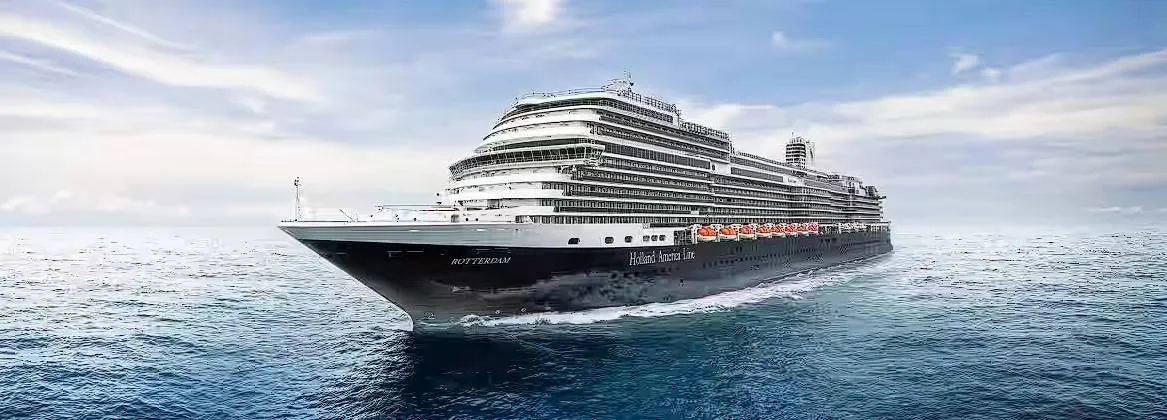
Holland America Line and Viking Ocean Cruises are the two premium lines most often compared by Australian travellers over 55 — both attract culturally curious couples, both sail the Mediterranean and Northern Europe, and both deploy ships to Sydney. Jake Hower draws on 21 years of cruise industry experience to unpack where these lines converge and where they diverge.
| Holland America Line | Viking Ocean Cruises | |
|---|---|---|
| Category | Premium | Premium |
| Rating | ★★★★☆ | ★★★★★ |
| Fleet size | 11 ships | 12 ships |
| Ship size | Mid-size (1,000-2,500) | Small (under 1,000) |
| Destinations | Caribbean, Alaska, Northern Europe, Mediterranean | Mediterranean, Scandinavia, Asia, Caribbean |
| Dress code | Smart casual | Smart casual |
| Best for | Classic cruise enthusiasts and mature travellers | Destination-focused culturally curious adults |
Holland America and Viking are both excellent premium lines that serve mature, destination-focused travellers — but they solve different problems. Viking is the better choice for couples who want an all-inclusive fare covering shore excursions, speciality dining, Wi-Fi, and thermal spa access on smaller ships (930 guests) with a guaranteed adults-only atmosphere and no formal nights. Holland America is the better choice for travellers who want more ship variety, livelier evening entertainment with Music Walk venues, a genuine casino, lower entry-level pricing, multigenerational flexibility, and unmatched Alaska expertise built over 75 years. For Australians specifically, Viking's Companion Fly Free programme from 14 domestic gateways adds genuine value on international sailings, while Holland America's expanded two-ship Australian deployment for 2026/27 and tiered Mariner Society loyalty programme offer long-term advantages for frequent cruisers.
The core difference
Holland America Line and Viking Ocean Cruises attract the same traveller on paper — culturally curious couples over 55 who want quality dining, destination enrichment, and a refined atmosphere without the chaos of a mega-ship. They overlap in the Mediterranean, Northern Europe, Alaska, and Australian waters. They share a smart-casual dress code most evenings. They both draw praise for service and food quality. On the surface, this looks like a comparison between near-identical products at slightly different price points.
It is not. The fundamental difference is philosophical, and it shapes every aspect of the onboard experience.
Holland America is a heritage cruise line — founded in 1873, steeped in Dutch maritime tradition, and built around the belief that a great cruise ship should offer variety. Eleven ships across four distinct classes carry between 1,432 and 2,668 passengers, each with a casino, multiple live music venues, production shows, a choice of specialty restaurants, and a range of cabin types from inside staterooms to the 1,290-square-foot Pinnacle Suite. The fleet spans 27 years of shipbuilding, from the intimate Volendam (1999) to the LED-wrapped World Stage on Rotterdam (2021). Holland America rewards exploration of the ship itself — there are venues to discover, Music Walk clubs to wander between, and Gala Nights that create a sense of occasion. It is a classic cruise experience, evolved and refined but unmistakably rooted in tradition.
Viking is a destination-focused brand — founded in 1997, designed around the conviction that the ship should serve the destination, not compete with it. Twelve virtually identical ocean vessels at 47,800 to 54,300 gross tonnes carry 930 to 998 guests each. There is no casino, no children’s programme, no water slides, and no formal nights. The entertainment is the destination itself, supported by a Resident Historian programme, TED Talks screenings, Metropolitan Opera performances, and destination speakers who are genuine experts in the regions being sailed. Every cabin has a private veranda. Every speciality restaurant is included. The Scandinavian design — blonde wood, muted tones, clean lines — creates a calm environment that feels more boutique hotel than floating resort.
In my experience advising Australian travellers, the choice between these two lines rarely comes down to price or itinerary. It comes down to what you want your evenings to look like — lively Music Walk venues and a flutter at the casino, or a quiet conversation in the Explorers’ Lounge about tomorrow’s port call.
What is actually included
This is where the comparison generates the most confusion and where I spend the most time with clients. Both lines market to premium travellers, but the scope of inclusions is fundamentally different.
Viking includes in every fare: a private veranda (every cabin has one — no inside staterooms exist); all dining venues including Manfredi’s Italian, The Chef’s Table five-course tasting menu, the World Cafe, and Mamsen’s Norwegian deli; beer, wine, and soft drinks at lunch and dinner; speciality coffees, teas, and filtered water around the clock; one shore excursion per port (typically a two-to-three-hour guided walking or panoramic bus tour); basic Wi-Fi on multiple devices; access to the LivNordic Spa thermal suite (sauna, steam room, snow grotto, hydrotherapy pool, cold plunge, and heated tile loungers); self-service laundry with complimentary detergent; 24-hour room service; and enrichment lectures including the Resident Historian programme.
Viking does not include: gratuities (approximately US$17 per person per day, charged to the onboard account); cocktails and premium spirits (US$8–$15 per drink, or the Silver Spirits Beverage Package at US$27 per person per night); The Kitchen Table cooking experience (US$180–$260 per person); spa treatments; personal training; and flights or transfers.
Holland America includes in the base fare: stateroom accommodation; main Dining Room meals (breakfast, lunch on select days, dinner); Lido Market buffet; casual dining at Grand Dutch Cafe, Dive-In burgers, and New York Pizza; afternoon tea; 24-hour room service with a complimentary basic menu; fitness centre and pool access; World Stage productions and live music; America’s Test Kitchen cooking shows; EXC Talks and destination programming; and BBC Earth In Concert screenings.
Holland America does not include in the base fare: gratuities (US$17 per person per day for non-suite, US$19 for suites); all alcoholic beverages; speciality dining surcharges ($29–$55 per person plus 18 per cent service fee); Wi-Fi (from approximately US$18 per day); thermal suite access (approximately US$49 per day pass or US$149–$299 per voyage); shore excursions; and specialty fitness classes.
Holland America’s Have It All Premium Package bridges the gap at approximately US$55 per person per day. It adds a Signature Beverage Package (wines, beers, spirits, and cocktails up to US$11 per drink, 15-drink daily limit); one to three speciality dining evenings depending on cruise length; Wi-Fi Surf on one device; and a shore excursion credit of US$100–$200 per person depending on voyage length. The periodic Have It All Early Booking Bonus expands this further with free prepaid gratuities, an upgraded Elite Beverage Package, and Premium Wi-Fi.
The practical difference is significant. When you add Holland America’s Have It All package to a verandah cabin fare and compare it to Viking’s all-inclusive veranda fare, the total daily cost often converges. But the detail matters. Viking’s included excursion is an actual guided tour at every port, not a credit toward one. Viking’s dining inclusion means Manfredi’s and The Chef’s Table every night without signing a bill. Viking’s Wi-Fi works on multiple devices simultaneously. Holland America’s Have It All beverage package caps at US$11 per drink and 15 drinks per day; Viking includes house wine and beer without those restrictions at meals but charges for cocktails. Holland America retains a clear advantage for travellers who want a lower entry point — an inside cabin on the base fare starts at approximately US$100–$150 per person per day, a price level that simply does not exist on Viking where every cabin is a veranda.
Dining and culinary experience
Both lines serve quality food and attract food-motivated travellers, but the dining model and culinary identity are distinct.
Viking’s dining is included and consistent. The Restaurant is the main dining room with open seating, a daily-changing menu reflecting the itinerary’s regions, and always-available classics including Norwegian salmon and the Viking steak. Manfredi’s — named after Silversea founder Manfredi Lefebvre, a friend of Viking founder Torstein Hagen — serves authentic Italian with housemade pasta, osso buco, and regional wines in an intimate open-kitchen setting. It is included without surcharges and available every evening. The Chef’s Table offers a five-course tasting menu with wine pairing that rotates every three days through Asian, French bistro, Norwegian, and thematic menus — also included. Mamsen’s, named after Hagen’s mother, serves Norwegian waffles, open-faced sandwiches, and Scandinavian pastries throughout the day. The World Cafe is an elevated market-style buffet with made-to-order stations, a sushi bar, and themed dinner nights. Wintergarden hosts a traditional afternoon tea with three-tiered stands, finger sandwiches, and live music — a daily ritual many guests come to love. The only surcharge venue is The Kitchen Table, a two-part experience where you shop for ingredients at a local market with Viking chefs in the morning and cook a multi-course meal together in the evening (US$180–$260, limited to 12 guests). Complimentary 24-hour room service rounds out the options. Beer, wine, and soft drinks are included at lunch and dinner throughout.
Holland America’s dining offers more variety but with surcharges. The main Dining Room serves a rotating multi-course menu each evening with open seating or fixed-time options. The Lido Market is a modern buffet marketplace with themed stations. Grand Dutch Cafe serves Dutch heritage fare — Stroopwafel, Dutch coffee, savoury snacks — complimentary. Dive-In does poolside burgers and New York Pizza serves thin-crust pies, both included.
The speciality restaurants carry surcharges: Pinnacle Grill (premium steakhouse and seafood, US$46 dinner, US$19 lunch); Rudi’s Sel de Mer (Mediterranean bistro by Master Chef Rudi Sodamin, US$55); Canaletto (Italian trattoria, US$29); Tamarind (pan-Asian, US$35); and Nami Sushi (Japanese omakase, US$55, praised by Conde Nast Traveler). An 18 per cent service fee is added to all speciality dining cover charges. Holland America’s Culinary Council — led by Rudi Sodamin and including three-Michelin-star chef Jonnie Boer, sushi master Andy Matsuda, and chocolate master Jacques Torres — brings genuine culinary credibility. Select sailings feature Culinary Council chefs aboard for demonstrations, dinners, and meet-and-greets. The America’s Test Kitchen partnership delivers live cooking shows and hands-on workshops fleet-wide — a unique and genuinely popular enrichment offering that Viking has no direct equivalent to.
Holland America also maintains complimentary 24-hour room service with a basic menu — one of the last non-luxury lines to do so. Club Orange, an add-on programme at US$15–$25 per person per day, provides a dedicated restaurant on Pinnacle-class ships, an enhanced room service breakfast menu, and priority seating — a worthwhile upgrade for food-focused travellers.
In my experience, Viking’s dining is reliably good across the fleet — the consistency of having every ship virtually identical means The Chef’s Table on Viking Star delivers the same quality as on Viking Vela. Holland America’s dining peaks impressively at Nami Sushi and Tamarind, and the Culinary Council brings genuine celebrity-chef influence. But the surcharges add up. A couple dining at two speciality restaurants on a seven-night Holland America cruise will spend an additional US$120–$200 before the 18 per cent service fee. On Viking, every restaurant every night is included. For food-motivated travellers who want variety and do not mind paying, Holland America’s range is broader. For travellers who want excellent dining without ever reaching for a wallet, Viking.
Suites and accommodation
The accommodation philosophies differ in a way that reflects each line’s broader identity — Holland America offers choice and range; Viking offers consistency and simplicity.
Holland America’s stateroom range spans from the smallest inside cabin at 143 square feet to the Pinnacle Suite at 1,290 square feet. Inside staterooms (143–225 square feet) provide the lowest entry price. Ocean-view staterooms (175–282 square feet) add a window or porthole. Verandah staterooms (228–405 square feet including verandah) are the most popular category and come in several sub-categories including Aft-View Verandah with wake views. Spa Verandah staterooms sit near the Greenhouse Spa with yoga mats and upgraded bath amenities. The unique Lanai Staterooms on Pinnacle-class ships offer direct Promenade Deck access — a walk-off-the-balcony-to-the-teak-deck arrangement that is unlike anything on Viking.
Holland America’s suite tiers include the Vista Suite (260–356 square feet), the Neptune Suite (465–502 square feet with separate living area and dual-sink bathroom), and the Pinnacle Suite (approximately 1,290 square feet with a large living room, dining area, dressing room, and private verandah with whirlpool). Neptune and Pinnacle suite guests receive access to the exclusive Neptune Lounge — a private space with a concierge, refreshments, a library, and cocktail parties — plus complimentary Club Orange dining, priority embarkation and tendering, complimentary laundry and pressing, and an enhanced room service breakfast menu.
Viking’s cabin categories are simpler. The Veranda Stateroom (270 square feet including veranda) is the entry level — and there is no cabin without a private veranda. The Deluxe Veranda (270 square feet, identical layout, better location, adds minibar and binoculars) is the most popular category with 272 per ship. Penthouse Veranda (338 square feet) adds an upgraded minibar with alcoholic beverages, welcome champagne, an espresso machine, cashmere blanket, and priority dining reservations. Penthouse Junior Suite (405 square feet) adds a separate living area, complimentary laundry and dry cleaning, guaranteed speciality restaurant reservations, and early stateroom access. Explorer Suite (757 square feet) is the only category with a bathtub. The Owner’s Suite — one per ship, 1,319 square feet — features a personal sauna, wet bar, and kitchenette.
A critical difference: Viking does not offer butler service in any cabin category. The highest suites receive concierge service and enhanced amenities, but there is no dedicated personal butler. Holland America’s Neptune Lounge concierge provides personalised service for dining, excursion, and onboard bookings — not butler service in the luxury-line sense, but a meaningful step above Viking’s top-tier offering in terms of dedicated personal attention.
The other critical difference is cabin variety. Holland America’s inside and ocean-view cabins provide a genuinely lower entry price point that does not exist on Viking. If budget matters and you are comfortable without a balcony, Holland America starts significantly cheaper. Viking’s philosophy is that every guest deserves a veranda — there is no economy tier, and the uniformity ensures consistency across the ship. Because every Viking ship is virtually identical, a guest booking a Deluxe Veranda on Viking Star knows exactly what they will get on Viking Neptune or Viking Vela. Holland America’s four ship classes mean the cabin experience varies more between vessels — a verandah stateroom on the 2021 Rotterdam feels quite different from the same category on the 2002 Zuiderdam.
Pricing and value
Comparing headline fares between Holland America and Viking is misleading without accounting for what each fare includes. I walk clients through the total-cost comparison regularly, and the gap is almost always narrower than it first appears — though Holland America retains a genuine entry-level advantage.
Viking’s directional pricing for a seven-night Mediterranean cruise (Veranda Stateroom, per person, at time of writing): approximately US$350–$600 per night depending on season. This includes the veranda cabin, all dining, beer and wine at meals, Wi-Fi, one shore excursion per port, thermal spa access, and self-service laundry. Gratuities at approximately US$17 per day are additional.
Holland America’s directional pricing for a seven-night Mediterranean cruise (per person, at time of writing): an inside cabin starts from approximately US$115–$150 per night; an ocean-view from US$140–$175; a verandah from US$175–$230 per night. Add the Have It All package at approximately US$55 per day for drinks, one speciality dining evening, Wi-Fi, and a shore excursion credit. Add gratuities at US$17 per day. The total for a verandah cabin with Have It All often reaches US$250–$300 per night — still meaningfully less than Viking, but the inclusions gap narrows considerably. Add additional speciality dining evenings, a thermal suite pass, and Wi-Fi for a second device, and the figures converge further.
Holland America’s entry point at roughly half Viking’s per-night rate is real and significant for budget-conscious travellers. An inside cabin on the base fare at US$115 per night has no Viking equivalent. For longer voyages — the 35-day Legendary Australia Circumnavigation or the 133-day Grand World Voyage — Holland America’s lower per-diem rate compounds into meaningful savings over weeks and months. Holland America’s standby programme also offers last-minute fares from approximately US$99 per person per day for inside and ocean-view cabins, and from US$129 for verandahs.
Where Viking’s value proposition strengthens is in the total-cost analysis for travellers who would naturally buy the extras. If you would purchase a beverage package, book shore excursions at every port, eat at speciality restaurants regularly, use Wi-Fi on multiple devices, and visit the thermal spa daily, Viking’s all-inclusive fare often delivers equivalent or better value than Holland America with all the add-ons applied. The included shore excursion at every port is particularly significant — a typical guided tour costs US$80–$200 per port on any line, and Viking provides one at every stop without additional cost.
For Australian travellers, two additional factors shape the value equation. Viking’s Companion Fly Free programme from 14 Australian gateways provides economy flights worth up to AU$2,500 per person on select international sailings — a meaningful saving for couples flying to Europe or Alaska. Holland America offers fly-cruise packages through its Australian office but without a comparable recurring promotion. Promotional pricing on both lines fluctuates significantly — Viking offers early booking discounts of up to US$4,000 per couple, while Holland America’s Have It All Early Booking Bonus periodically includes free prepaid gratuities and upgraded beverage packages. The smartest approach is always to compare total cost for your specific sailing, including every extra you plan to use.
Spa and wellness
Both lines offer quality spa facilities, but the inclusion model sets them apart more sharply than the facilities themselves.
Viking’s LivNordic Spa is rooted in Scandinavian wellness tradition and was designed by Stockholm-based consultancy Raison d’Etre. The headline differentiator is that the thermal suite is complimentary for every guest — not reserved for suite passengers or sold as a day pass. The facilities include a hydrotherapy pool with underwater benches and a faux fireplace, a Finnish sauna, a eucalyptus-scented steam room, heated tile loungers, a cold plunge pool, a relaxation room with ocean views, and Viking’s signature snow grotto — a sub-zero room with gently falling snowflakes that delivers the cold phase of the Nordic bathing cycle. Viking was the first cruise line to feature a snow grotto at sea when it debuted on Viking Star in 2015. Most cruise lines charge US$40–$60 per day for equivalent thermal suite access; Viking includes it for all guests. The fitness centre, outdoor gym on the Sports Deck, and most group fitness classes are also complimentary. Spa treatments carry a surcharge — a 50-minute Swedish massage runs approximately US$139–$209 depending on variation. The spa is operated by an independent company, and the daily gratuity does not cover spa staff.
Holland America’s Greenhouse Spa & Salon is named for its natural, earth-inspired wellness philosophy and operates on all 11 ships. The thermal suite includes a hydrotherapy pool with specialty jets, heated ceramic lounge chairs, a steam room and aromatherapy steam room, a dry sauna, rain showers, and full-length ocean-view windows. It is a quality facility — but it is not included. A thermal suite day pass costs approximately US$49. A voyage pass for a seven-day cruise runs approximately US$149–$299 per stateroom. Five-Star Mariners (the highest loyalty tier, requiring 500 cruise day credits) receive one complimentary thermal suite day pass per cruise. The fitness centre and basic stretch and abs classes are complimentary; specialty classes including spinning, yoga, Pilates, and boot camp carry surcharges. Spa Staterooms and Suites located near the Greenhouse Spa include yoga mats and upgraded bath amenities as a wellness-focused cabin category.
The distinction is clear. Viking gives every guest daily access to a quality thermal suite at no additional cost. Holland America charges for access unless you are in the highest loyalty tier. For travellers who use thermal facilities regularly — and in my experience, most guests over 55 do, particularly on sea days — Viking’s complimentary access represents genuine daily value. For travellers who rarely use spa facilities and would rather pay less overall, Holland America’s a la carte approach means you are not paying for something you will not use.
Entertainment and enrichment
This is where these two lines diverge most sharply, and where personal preference matters more than any objective quality comparison. In fact, I would argue this single section determines the right line for most travellers more than any other factor.
Holland America delivers the best live music at sea. The Music Walk concept is a genuine differentiator that no other premium line matches. On Pinnacle-class ships (Koningsdam, Nieuw Statendam, Rotterdam), three adjacent venues create a lively evening circuit: B.B. King’s Blues Club with an eight-piece band performing authentic Memphis blues; Rolling Stone Rock Room with classic rock hits; and Billboard Onboard, an interactive piano bar featuring chart-topping favourites. On Vista and Signature-class ships, the Rolling Stone Lounge offers a seven-piece band covering R&B, rock, and pop six nights per week, alongside Billboard Onboard. Lincoln Center Stage, the long-running classical music partnership, has evolved from a dedicated quartet on select ships to a travelling ensemble performing across the fleet on the World Stage. The World Stage theatre itself hosts original productions, guest performers, and the popular BBC Earth In Concert — wildlife footage with live orchestral soundtrack on the Pinnacle-class ships’ 270-degree LED screens. Holland America’s 2025 entertainment evolution brought higher-energy World Stage shows, a refreshed Cruise Director role, and the regional soloist programme — culturally inspired live performances matching the itinerary region, from folk guitar in Alaska to steel pan in the Caribbean.
Viking delivers the deepest enrichment programme at sea. The Resident Historian programme is unique in the cruise industry — a university-style curriculum of lectures, roundtable discussions, and daily office hours for one-on-one conversations, all tailored to the specific itinerary being sailed. Historians travel aboard for four to eight weeks at a time and provide genuinely academic-quality content. Destination speakers include archaeologists, authors, scientists, and cultural experts. Destination Performances bring local musicians and performers aboard — flamenco in Spain, opera in Italy, folk music in Scandinavia. The Metropolitan Opera “Live in HD” screenings with backstage interviews and TED Talks programmes provide intellectual stimulation that no other premium line matches. Viking Orion and Viking Jupiter feature onboard planetariums. The Explorers’ Lounge — a two-level space with floor-to-ceiling glass at the bow, a library, and a telescope — sets the cultural tone for the entire ship.
Viking deliberately avoids traditional cruise entertainment. There are no Broadway-style production shows, no casino floor shows, no comedy clubs, and no pool deck DJs. Torshavn is the late-night venue, though “late night” on Viking tends to wind down earlier than on Holland America. The absence of casino noise, children’s activities, and high-energy themed parties creates a quietude that some find deeply restorative and others find too still.
Holland America’s enrichment is strong but differently constructed. America’s Test Kitchen delivers live cooking shows and hands-on workshops fleet-wide — genuinely popular and educational. The BBC Earth partnership brings nature-focused presentations and immersive screenings. Explorations Central (EXC) provides destination talks, EXC Encounters with local cultural representatives boarding before port calls, and detailed port guides in partnership with AFAR Media. These are good programmes, but they tend toward lifestyle enrichment rather than the academic depth of Viking’s Resident Historian.
The forum consensus I see echoed by my own clients: if you want a lively evening scene with music clubs, a casino, and production shows, choose Holland America. If you prefer quiet conversation, a good book, and cultural performances, choose Viking. Neither approach is wrong — they serve fundamentally different preferences.
Fleet and destination coverage
The fleet comparison reveals different growth strategies, different scales, and different approaches to consistency — all of which matter when choosing where to sail.
Holland America operates 11 ships across four classes spanning 27 years of shipbuilding. The three Pinnacle-class ships (Koningsdam 2016, Nieuw Statendam 2018, Rotterdam 2021) are the flagship product at 99,500 gross tonnes carrying approximately 2,650 guests, featuring the World Stage with 270-degree LED screens and the full Music Walk concept. Two Signature-class ships (Eurodam 2008, Nieuw Amsterdam 2010) carry approximately 2,106 guests. Four Vista-class ships (Zuiderdam 2002 through Noordam 2006) carry approximately 1,964 guests. Two R-class ships (Volendam 1999, Zaandam 2000) are the oldest at approximately 1,432 guests each, both having received dry-dock refurbishments to extend service life. Notably, Holland America has no new ships on order or under construction — the last delivery was Rotterdam in July 2021 — making the fleet expansion timeline uncertain. Recent investment has gone into refurbishments: Zuiderdam, Oosterdam, and Zaandam all received significant dry-dock upgrades in 2025.
Viking operates 12 ocean ships (growing to 15 or more by end of 2028) built on a philosophy of deliberate consistency. Nine Star-class ships (2015–2023) at 47,800 gross tonnes each carry 930 guests. Two Vela-class ships (Viking Vela, December 2024; Viking Vesta, July 2025) at approximately 54,300 gross tonnes carry 998 guests, with four more Vela-class vessels on order through 2028. Viking also operates two expedition ships (Viking Octantis and Viking Polaris, 378 guests each) and approximately 80 river ships. Every ocean ship has the same deck layout, same restaurant names, same cabin categories, and same public spaces. A guest who knows Viking Star knows Viking Saturn. The Vela-class ships add hybrid engines, top-deck solar panels, and 35 additional cabins, but maintain the identical design language.
Destination coverage overlaps substantially — both lines serve the Mediterranean, Northern Europe, Alaska, Australia/New Zealand, Asia, the Caribbean, and extended world voyages.
Alaska is Holland America’s crown jewel. The line has sailed Alaska for over 75 years — since before Alaska became a state — with up to six ships deployed each season, the most of any cruise line. Homeports include Seattle and Vancouver. Itineraries range from seven-day Inside Passage to the 28-day Arctic Circle Solstice Legendary Voyage. Holland America holds Glacier Bay National Park permits, limited to select lines. Viking’s Alaska presence is smaller, typically offering one itinerary per season.
Scandinavia and Northern Europe are Viking’s heartland. The brand identity is Nordic, the spa design is Scandinavian, and the Resident Historian programme provides deep cultural context for Baltic and fjord itineraries. Viking’s “Into the Midnight Sun” and “Viking Homelands” are signature itineraries with an authenticity that is difficult to replicate. Holland America has a strong Northern Europe programme with three ships deployed in 2026 and four new ports (Aberdeen, Kalundborg, Odda, Portsmouth), but Viking has a home-ground advantage here.
The Mediterranean is strong for both. Holland America offers 28 Collectors’ Voyages of 14–27 days and up to 21 days with no repeat ports. Viking’s smaller ships access more intimate ports and frequently offer off-season Mediterranean sailings when major sites are less crowded.
World cruises are a major offering from both lines. Holland America’s 2026 Grand World Voyage covers 133 days on Volendam — 51 ports in 23 countries across five continents including Antarctica. Viking offers multiple world cruise variants, including the 170-day World Voyage III covering 41 countries and 82 guided tours. Viking world cruises typically include business-class airfare as part of promotions, plus substantial shipboard and excursion credits.
Where each line excels
Holland America excels in:
- Alaska expertise. Over 75 years of Alaska sailings, up to six ships deployed each season, Glacier Bay permits, and itineraries ranging from seven to 28 days. No other premium line matches this depth for Alaska.
- Live music and evening entertainment. The Music Walk concept — B.B. King’s Blues Club, Rolling Stone Rock Room, Billboard Onboard — delivers genuinely excellent live music that Viking does not attempt. The World Stage productions and BBC Earth In Concert on Pinnacle-class ships add further evening variety.
- Value entry point. Inside cabins from approximately US$100–$150 per person per day provide a genuinely lower entry to premium cruising. The Have It All package at US$55 per day adds significant inclusions without reaching Viking’s headline fare.
- Multigenerational and family travel. Club HAL welcomes children aged 3 to 17, and summer Alaska sailings accommodate large family groups. Viking is strictly adults-only.
- Casino gaming. A full casino on every ship with slots, table games, and poker. Viking has no gambling whatsoever.
- Longer voyages at lower per-diems. Grand Voyages, Legendary Voyages, and the 133-day Grand World Voyage offer extended sailing at per-diem rates that compound into significant savings over weeks and months compared to Viking.
- Culinary variety and celebrity-chef influence. The Culinary Council with Rudi Sodamin, Jonnie Boer, Andy Matsuda, and Jacques Torres, plus America’s Test Kitchen and Nami Sushi, deliver a breadth of food programming that Viking does not match.
- Tiered loyalty rewards. The Mariner Society’s five tiers offer escalating benefits including speciality dining discounts, complimentary laundry, and thermal suite passes — tangible rewards that accumulate meaningfully for frequent cruisers.
Viking excels in:
- All-inclusive value. Speciality dining, shore excursions, Wi-Fi, thermal spa access, and beer and wine at meals are all included in the fare — eliminating the mental arithmetic of add-on costs.
- Cultural enrichment. The Resident Historian programme, TED Talks, Metropolitan Opera screenings, destination speakers, and destination performances create an intellectually stimulating environment that no other premium line matches.
- Smaller ship intimacy. At 930 guests versus Holland America’s 1,432–2,668, Viking ships feel notably calmer, with less crowding, shorter queues, and a more personal relationship with crew. The crew-to-passenger ratio of 1:2 versus Holland America’s approximately 1:2.5 translates to more attentive service.
- Consistent fleet product. Know one Viking ship, know them all. This eliminates the ship-lottery anxiety that can arise with Holland America’s four distinct ship classes spanning 27 years.
- Adults-only atmosphere. The strict 18-plus policy, no casino, and no themed parties create a serene environment that couples specifically seek. Holland America allows children, and summer school-holiday sailings can change the atmosphere significantly.
- Scandinavian wellness. The complimentary LivNordic Spa thermal suite — including the snow grotto — is available to every guest daily without booking or payment.
- Fleet growth and new ships. Six new Vela-class ships on order through 2028, compared to Holland America’s zero new-build pipeline. For travellers who want the newest hardware at sea, Viking is investing more aggressively.
- No formal nights. The consistent “elegant casual” dress code every evening simplifies packing and appeals to travellers who dislike dressing up.
Standout itineraries for Australian travellers
Holland America
35-Day Legendary Australia Circumnavigation (Noordam, departing November 2026). A full circumnavigation of Australia with four ports in Papua New Guinea, overnights in Fremantle and Hobart, and late-night stops in Adelaide, Phillip Island, and Melbourne. This is Holland America’s signature Australian offering and one of the most comprehensive coastal itineraries available.
14-Day Great Alaska Explorer (Noordam, roundtrip Seattle, new for 2026). An extended Alaska itinerary with deeper port calls — ideal for Australians flying to Seattle. Holland America’s Alaska heritage, Glacier Bay permits, and six-ship deployment make this the gold standard. Fly-cruise packages are bookable through Holland America’s Australian office with Los Angeles or Vancouver as common transit points.
133-Day Grand World Voyage (Volendam, departing January 2026, roundtrip Fort Lauderdale). Fifty-one ports in 23 countries across five continents, including an Antarctica experience, Great Barrier Reef, Singapore, and the Mediterranean. Bookable in 21 to 55-day segments for Australians who cannot commit to the full voyage.
28-Day Legendary Arctic Circle Solstice (Noordam, departing June 2026, roundtrip Seattle). Thirteen ports across Alaska and British Columbia, two days of scenic Inside Passage cruising, remote ports including Nome and Dutch Harbor, and Great Bear Rainforest cruising. An extraordinary extended Alaska experience.
14-Day Australia and New Zealand (Noordam or Westerdam, Sydney to Auckland or roundtrip Sydney, 2026/27 season). The core Australian season itinerary covering both countries with ports including Melbourne, Hobart, and key New Zealand stops. With two ships deployed for the first time, departure flexibility doubles.
Viking
32-Day Grand Australia Circumnavigation (Viking Orion, roundtrip Sydney). A full loop of the Australian coast on a 930-guest ship — a unique offering in the premium segment at this intimate size. The included shore excursion at every port provides guided experiences without additional cost.
15-Day Viking Homelands (Stockholm to Bergen). Viking’s signature itinerary through the Baltic capitals — the cruise that best showcases the Resident Historian programme, Scandinavian design, and Nordic cultural authenticity. Eight countries, multiple overnights. Accessible from Australia via Stockholm or Copenhagen with Viking’s Companion Fly Free programme.
15-Day Into the Midnight Sun (London to Bergen). Above the Arctic Circle in summer with Norwegian fjords, Lofoten Islands, Tromso, and the North Cape. Twenty-four-hour daylight, spectacular fjord scenery, and a destination that plays to every Viking strength. London is an easy connection from Australian gateways.
15-Day Australia and New Zealand (Sydney to Auckland or reverse, Viking Orion). The core Australian season itinerary covering both countries on a smaller ship better suited to New Zealand’s intimate harbours. The included excursion at every port adds genuine value.
170-Day Viking World Voyage III (Fort Lauderdale to Stockholm, departing December 2026 on Viking Sky). Six continents, 41 countries, 82 guided tours, 18 overnight cities. World cruise promotions include free business-class airfare and shipboard credits worth over US$60,000 per couple — a significant consideration for Australian travellers facing long-haul positioning flights.
Ship-by-ship recommendations
Holland America
Rotterdam — The best introduction to Holland America for a first-time guest. As the newest Pinnacle-class ship (2021), it delivers the full Music Walk experience with B.B. King’s Blues Club, Rolling Stone Rock Room, and Billboard Onboard, plus the World Stage with 270-degree LED screens, the standalone Rudi’s Sel de Mer, and the most refined public spaces in the fleet. If you are comparing Holland America to Viking, sail Rotterdam for the fairest comparison.
Koningsdam or Nieuw Statendam — The other two Pinnacle-class ships offer the same amenities as Rotterdam. Koningsdam is the top-rated ship across review platforms for service, food, and entertainment. Nieuw Statendam is praised for food quality specifically. Either is an excellent choice for Mediterranean or Northern Europe.
Noordam — The primary ship for Australian waters. If you want to sail Holland America from Sydney without flying internationally, Noordam is the ship. It is Vista-class (2006) and shows its age in some cabin finishes, though the 2026 dry-dock programme should address this. The 35-day Legendary Australia Circumnavigation on Noordam is a standout itinerary.
Westerdam — Joining the Australian deployment for the 2026/27 season, doubling Holland America’s regional capacity. Also Vista-class (2004), sailing 13 to 28-day itineraries from Sydney and Singapore. A strong option for travellers wanting longer Australian and Southeast Asian itineraries.
Avoid booking Volendam or Zaandam as your first Holland America experience unless you are specifically seeking a smaller, more intimate ship. At 25-plus years old, these R-class vessels are significantly dated compared to the Pinnacle class despite refurbishments. If you are comparing Holland America to Viking’s newer fleet, the experience on these older ships will not represent the line at its best.
Viking
Viking Vela or Viking Vesta — The newest ocean ships (2024–2025) and the first of the Vela class. Slightly larger than Star-class siblings with hybrid engines and solar panels but the same deck layout and amenities. Book these for the newest hardware in the fleet.
Viking Orion — The primary ship for Australian and New Zealand seasons. If you want to sail Viking from Sydney without flying internationally, Orion is the ship. Also features the onboard planetarium — one of only two Viking ships with this space.
Viking Jupiter — The other ship with a planetarium. Primarily deployed to Northern Europe and the Mediterranean. A strong choice for those itineraries.
Any Star-class ship — Because Viking deliberately builds identical ships, the experience on Viking Star (2015) is functionally the same as Viking Saturn (2023). The crew can transfer between ships without retraining, and every public space, restaurant, and cabin layout is consistent. This means you can book based purely on itinerary and dates without worrying about ship quality. The consistent fleet product is genuinely one of Viking’s greatest strengths and a contrast to Holland America’s four-class fleet where the experience varies considerably.
For Australian travellers specifically
Both lines have invested in the Australian market, and the commitment is growing — though the shape of that investment differs.
Holland America’s Australian presence is expanding. For the 2025/26 season, Noordam serves as the sole ship based in Sydney from November through March, offering 14-day Australia and New Zealand itineraries, 28-day New Zealand and South Australia Discovery voyages, and 42-day South Pacific Islands explorations. For 2026/27, the investment doubles — Noordam and Westerdam together deliver 26 itineraries ranging from 13 to 35 days between September 2026 and April 2027. The 35-day Legendary Australia Circumnavigation includes overnights in Fremantle and Hobart. Holland America’s Australian office sits at 171 Clarence Street in Sydney, operating under the Carnival Australia umbrella alongside Princess and Cunard. The POLAR Online booking engine is well-regarded by Australian travel agents. Fly-cruise packages are bookable through the Australian office with Los Angeles and Vancouver as common transit points for Alaska and Caribbean itineraries.
Viking’s Australian presence centres on consistency and air value. Viking Orion deploys annually to Sydney from December to March with 14 to 32-day itineraries. Sixty-seven sailings are available between February 2026 and March 2028 across Viking’s global programme, with 17 touching Australian or New Zealand waters per season. The Companion Fly Free programme from Australian gateways is a genuine differentiator — covering economy flights worth up to AU$2,500 per person from Adelaide, Brisbane, Cairns, Canberra, Darwin, Gold Coast, Hobart, Launceston, Melbourne, Perth, and Sydney when booked through Viking Air. This is a significant benefit that Holland America does not match with any comparable recurring programme. The dedicated Australian website prices in AUD, and Viking runs Australian Explorer Society events in Sydney and Melbourne. Viking’s brand awareness in Australia is strong, driven partly by television advertising and partly by the established reputation of Viking river cruises — many Australian ocean cruise guests come to Viking via prior river experiences.
The loyalty pathway is a key differentiator. Holland America’s Mariner Society rewards loyalty with five escalating tiers. Three-Star Mariners (75 cruise day credits) receive 25 per cent off speciality dining and specialty coffees. Four-Star Mariners (200 credits) get complimentary laundry and pressing, plus 50 per cent dining discounts. Five-Star Mariners (500 credits) receive a complimentary thermal suite day pass per cruise. Suite guests earn double cruise day credits, accelerating tier progression. For Australian travellers who sail frequently, these compounding benefits create genuine financial value over time. Note, however, that Carnival Corporation does not cross-recognise loyalty across its brands — your Mariner Society status does not transfer to Princess, Cunard, or any other Carnival-owned line.
Viking’s Explorer Society is simpler — one tier, a US$200 travel credit for rebooking within a year (US$100 within two years), and a referral programme offering US$100 credits for both referrer and new guest. The lack of tiering means a 20-time Viking cruiser receives the same benefits as a two-time cruiser. Viking’s counter-argument — that the base product already includes what other lines reserve for loyalty rewards — has merit. If every guest already gets Wi-Fi, speciality dining, thermal spa access, and a shore excursion, there is less need for a loyalty programme to unlock those items.
Gratuities and the tipping question. Tipping is culturally foreign to most Australians, and both lines charge automatic daily gratuities — Holland America at US$17 per person per day (US$19 for suites), Viking at approximately US$17 per person per day. Neither line bakes gratuities invisibly into the fare the way some luxury lines do, so Australian travellers should budget for this daily charge on both lines.
The onboard atmosphere
The atmosphere on these two lines is genuinely different in ways that go beyond amenities and pricing — and in my experience, this is the factor that determines whether a client rebooks.
Holland America’s atmosphere is classic, warm, and gently lively. The ships feel like a refined ocean liner brought into the modern era — teak promenades, art collections, fresh flowers, and public spaces that reward exploration. The Music Walk venues create a genuine evening energy that builds from cocktail hour through to late-night sets. B.B. King’s Blues Club is genuinely excellent — I have watched guests who had no intention of staying end up dancing until closing. Gala Nights create moments of occasion; passengers dress up willingly, and the Dining Room takes on a celebratory atmosphere. The casino adds a social element for those who enjoy it. The passenger demographic skews mature — approximately 75 per cent of guests are aged 55 and over — but the atmosphere is livelier than Viking’s, particularly on Pinnacle-class ships with the full Music Walk complement. Daytime is relaxed; evenings are polished without being pretentious. The presence of families during school holiday periods can shift the dynamic, particularly on Alaska summer sailings. Service is consistently praised, with Holland America winning Cruise Critic’s “Best Service” award for four consecutive years through 2025.
Viking’s atmosphere is calm, intellectual, and quietly refined. The Scandinavian design — blonde wood, neutral tones, clean lines, muted lighting — creates a space that feels more residential than resort. The Explorers’ Lounge at the bow, with its two storeys of panoramic glass, a library, and reading nooks, sets the cultural tone. The Living Room at the ship’s centre offers puzzles, board games, and quiet corners for conversation. Discussions at dinner tend to focus on the day’s port, tomorrow’s itinerary, or the morning’s Resident Historian lecture. The passenger base is older — predominantly in their 60s to 80s — and almost exclusively couples. The absence of casino noise, children’s activities, and production show announcements creates a peace that some find restorative and others find too still. Evenings run earlier. The ship rewards readers, thinkers, and travellers who are genuinely interested in where they are going. Staff are described across reviews as “incredibly kind, helpful, and attentive,” and the crew-to-passenger ratio of 1:2 supports a notably personal service standard.
The atmosphere distinction is the single most decisive factor in this comparison. Holland America offers a warmer, more social, more varied evening experience with genuine musical quality. Viking offers a quieter, more contemplative, more destination-connected daily rhythm. I recommend that clients uncertain between the two consider how they typically spend their evenings on holiday — with a glass of wine listening to live blues, or with a book overlooking the sea. That answer almost always points to the right line.
The bottom line
Holland America and Viking are both strong lines that serve the mature Australian traveller well, but they optimise for fundamentally different priorities — and the right choice depends entirely on what kind of cruise experience you are seeking.
Choose Viking when you want a culturally rich, adults-only experience where the destination is the main event. Choose it for the all-inclusive model — shore excursions, speciality dining, Wi-Fi, and thermal spa access included in every fare without the arithmetic of add-on packages. Choose it for smaller ships at 930 guests that create intimacy, calm, and a 1:2 crew-to-passenger ratio. Choose it for the Resident Historian programme, no formal nights, and a consistent fleet where every ship delivers the same product. Choose it for Scandinavia and Northern Europe, where Viking’s identity as a Nordic brand gives it an authenticity advantage. Choose it for the Companion Fly Free programme from Australian gateways. Accept that entertainment options are limited, that there is no casino, that the passenger demographic skews older, and that the identical-ship philosophy means less variety across the fleet.
Choose Holland America when you want a classic premium cruise with broader entertainment, a genuine casino, Music Walk venues that deliver the best live music at sea, and the flexibility of a la carte pricing with a lower entry point. Choose it for Alaska — where 75 years of heritage, up to six ships, and Glacier Bay permits make Holland America the undisputed specialist. Choose it for longer Grand Voyages and world cruises at lower per-diem rates that compound into significant savings. Choose it for multigenerational travel with Club HAL for children. Choose it for the Mariner Society loyalty programme with five tiers of escalating benefits. Choose it for the Culinary Council and America’s Test Kitchen culinary programming. Accept that add-ons accumulate, that the fleet spans 27 years and older ships show their age, that there are no new builds on order, and that the experience varies more between ship classes than Viking’s uniform fleet.
For most Australian couples over 55 seeking a premium cruise without children aboard, Viking’s all-inclusive model and smaller ships deliver a cleaner, simpler proposition — and the cultural enrichment programme is outstanding. For Australian travellers who want more ship, more variety, better value on longer voyages, Alaska expertise, or an evening scene with genuine musical energy, Holland America offers a quality product that has earned “Best Service” four years running. Many experienced cruisers sail both — Holland America for Alaska and extended voyages, Viking for European destination-intensive itineraries. That dual approach is not a compromise; it is arguably the smartest strategy of all.