Aurora Expeditions and Scenic Ocean Cruises are both Australian-owned expedition operators — a distinction shared by no other pairing in this series. Yet they occupy opposite ends of the expedition spectrum: Aurora is adventure-first with comfortable ships, Scenic is ultra-luxury that happens to go expedition. Jake Hower compares their philosophies, hardware, inclusions, and value for Australian travellers.
| Aurora Expeditions | Scenic Ocean Cruises | |
|---|---|---|
| Category | Expedition | Expedition / Luxury |
| Rating | ★★★★☆ | ★★★★☆ |
| Fleet size | 3 ships | 2 ships |
| Ship size | Small (under 500) | Yacht (under 300) |
| Destinations | Antarctica, Arctic, Patagonia, Japan | Mediterranean, Antarctica, Arctic, Northern Europe |
| Dress code | Relaxed | Casual elegance |
| Best for | Small-ship polar expedition adventurers | Ultra-luxury all-inclusive ocean travellers |
Aurora Expeditions is the adventure-first Australian expedition specialist — three purpose-built X-BOW ships carrying a maximum of 130 passengers, a 1:8 guide ratio, seven citizen science programmes, B Corp certification, and Hobart departures for East Antarctica. Scenic counters with ultra-luxury Discovery Yachts — 200 passengers in polar waters, all-suite all-veranda accommodation, butler service in every cabin, helicopters and a submarine, 10 dining venues, and a genuinely all-inclusive drinks programme. Choose Aurora when you want intimate small-ship adventure, the smoothest Drake Passage crossing, the widest activity menu, meaningful citizen science, and a sustainability-forward operator. Choose Scenic when you want expedition destinations wrapped in six-star luxury, helicopter flightseeing, submarine dives, butler service, complimentary premium spirits, and the comfort of returning to a floating boutique hotel after every landing.
The core difference
Aurora Expeditions and Scenic Ocean Cruises share something no other expedition cruise pairing can claim: both are Australian-owned, Australian-founded, and Australian-headquartered. Aurora was born in Sydney in 1991, founded by Greg Mortimer OAM — the first Australian to summit Everest without supplementary oxygen — and Margaret Werner. Scenic was born in Newcastle, NSW, in 1986, founded by Glen Moroney as a coach tour company before evolving into one of Australia’s most recognised luxury travel brands. That two Australian companies would independently build purpose-built expedition fleets sailing to Antarctica is remarkable. That they would approach the same destinations from diametrically opposite philosophies is what makes this comparison so compelling.
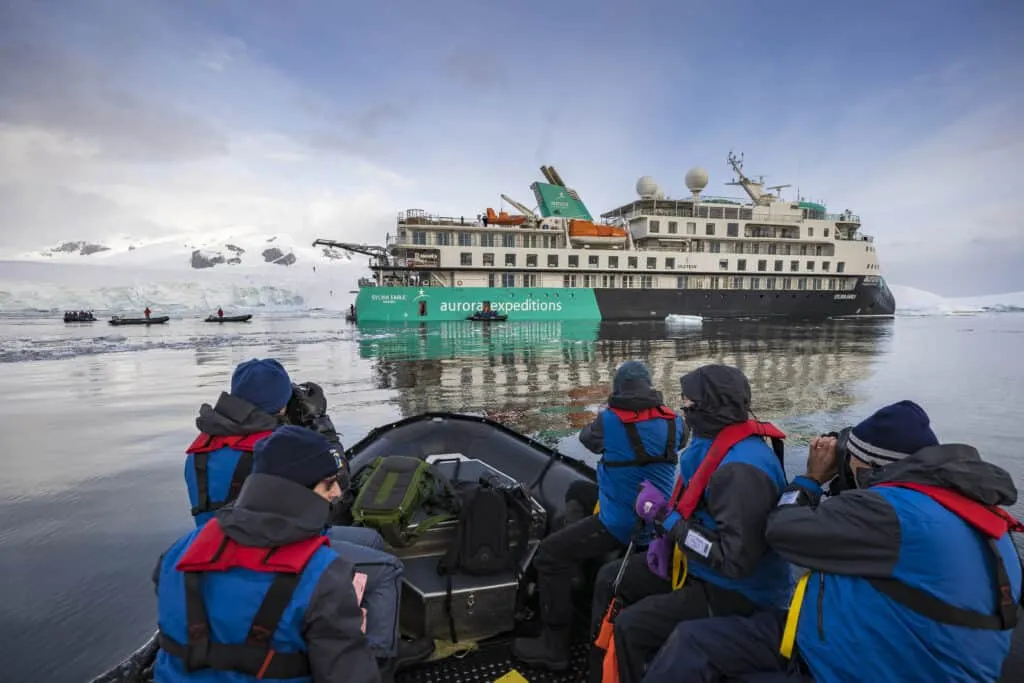
Aurora Expeditions is an adventure company that provides comfortable ships. The entire operation is built around what happens off the ship — Zodiac landings, kayaking, SCUBA diving, ice camping, ski touring, climbing, and citizen science. The ships are the platform; the ice is the point. With a maximum of 130 passengers on polar expeditions, a 1:7 to 1:8 guide ratio, B Corp certification, seven active citizen science programmes, and a salmon ban driven by environmental conviction, Aurora wears its values visibly. The brand DNA is distinctly Australian in the best sense — egalitarian, unpretentious, adventure-obsessed, and environmentally conscious. Greg Mortimer himself still joins special voyages. The company is named after Sir Douglas Mawson’s legendary Antarctic ship. This is expedition cruising with a soul.
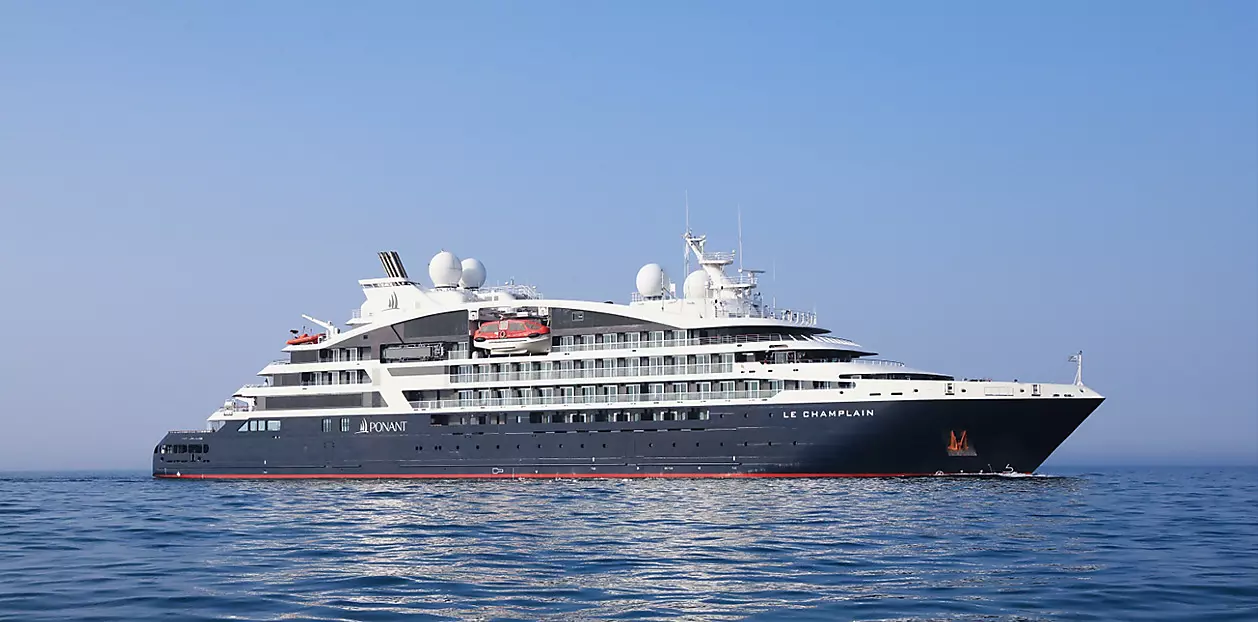
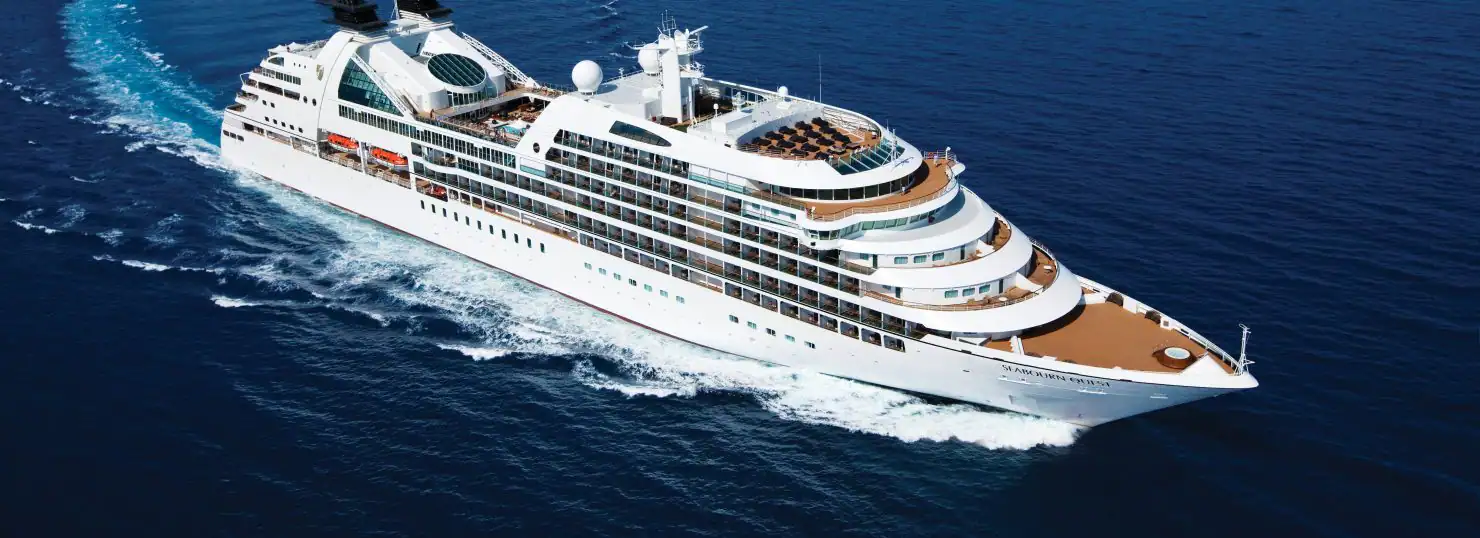
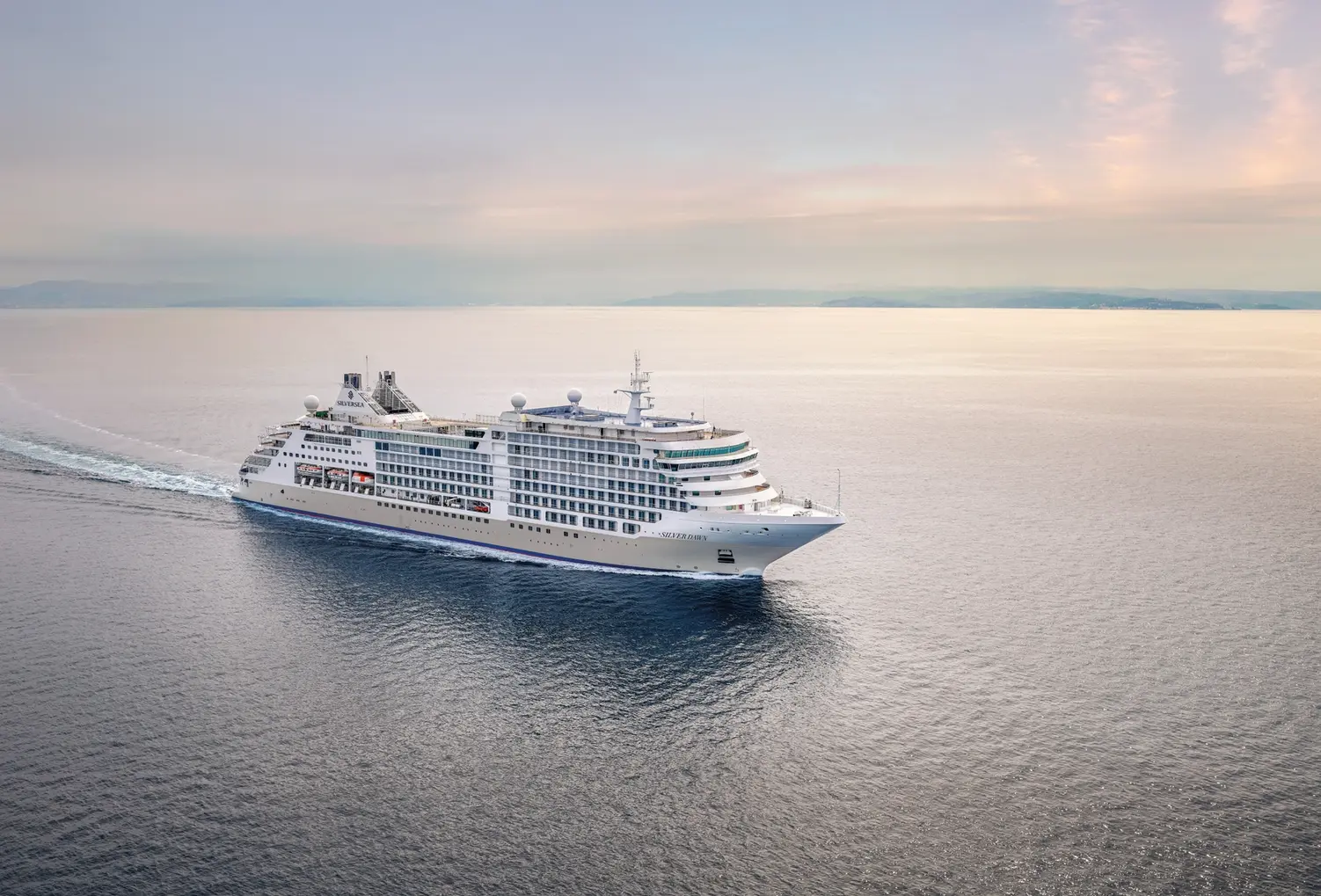
Scenic Ocean Cruises is a luxury company that happens to visit expedition destinations. The Discovery Yachts — Eclipse and Eclipse II — are floating boutique hotels with butler service in every suite, 10 dining venues, a 550-square-metre spa, over 100 complimentary whiskies at the Whisky Bar, and genuinely all-inclusive premium drinks. The onboard experience would not be out of place in a six-star resort. The expedition hardware, however, is extraordinary: two Airbus helicopters and a custom-built submarine on every voyage — a combination no other expedition line carries. Scenic calls its ships “Discovery Yachts” rather than expedition ships, and the terminology is revealing. This is luxury-first with expedition capability, not expedition-first with luxury touches.
For Australian travellers, the choice crystallises around a fundamental question: do you want your expedition to be defined by what happens on the ice, or what happens when you come back to the ship? Aurora puts the adventure at the centre and wraps it in comfort. Scenic puts luxury at the centre and adds adventure on top. Both approaches are valid. Neither is wrong. But they produce profoundly different voyages, and understanding that difference is the key to choosing correctly.
Expedition team and guides
The quality of the expedition team determines the quality of the expedition — full stop. A magnificent ship with mediocre guides delivers a mediocre experience. A modest ship with exceptional guides delivers a life-changing one. Both Aurora and Scenic understand this, though their approaches to team structure differ in scale and emphasis.
Aurora’s expedition team operates at a ratio of approximately 1:7 to 1:8 — with 15 to 20 specialists sailing alongside 130 passengers. This is among the best ratios in the expedition cruise industry and produces tangible benefits on every landing. Team members include marine biologists, glaciologists, ornithologists, historians, photographers, and dedicated activity leaders for kayaking, diving, climbing, and snowshoeing. Many have been with Aurora for over a decade; several for more than twenty years. Hayley Shephard, a New Zealand-born expedition leader, splits her seasons between Antarctic and Arctic operations. Richard I’Anson — Canon Master, twelve published books, Netflix documentary Tales By Light — sails as a guest photographer on select voyages. Critically, Aurora places a dedicated Photography Guide on every expedition, not just special departures. The team’s longevity creates genuine institutional knowledge — these guides know every landing site, every colony, every current pattern from years of repeated visits.
Scenic’s Discovery Team fields up to 20 members on Expedition Voyages (polar and Kimberley) and up to 15 on Discovery Voyages (Mediterranean, Japan, South Pacific). With 200 passengers in Antarctic waters, this produces a guide ratio of approximately 1:10 — competitive within the expedition industry but noticeably below Aurora’s 1:8. The team includes marine biologists, historians, geologists, glaciologists, ornithologists, naturalists, and photographers. Mike Cusack, an award-winning wilderness expert with over 30 years guiding experience in Australia’s northwest, leads Kimberley voyages with particular authority. All team members are trained in IAATO and AECO guidelines, though Scenic does not publicly disclose a formal proprietary training academy programme comparable to what some competitors operate.
The practical difference shows on landing days. With Aurora’s 130 passengers split into walking groups of 10 to 20, each led by an individual guide, the experience is intimate and educational — you can ask questions, linger at a penguin colony, and receive genuine one-on-one attention. Scenic’s 200 passengers divided among 20 guides produce slightly larger groups, and the double rotation required by IAATO’s 100-person shore limit means less cumulative time ashore per passenger. For travellers who prioritise guide quality and personal attention over onboard luxury, Aurora’s smaller team-to-passenger ratio delivers a meaningfully different shore experience.
Ships and expedition hardware
This section reveals the sharpest contrast between these two lines — the hardware each deploys shapes every aspect of the expedition.
Passenger capacity and IAATO implications. Aurora’s three ships — Greg Mortimer (2019), Sylvia Earle (2022), and Douglas Mawson (2025) — carry a maximum of 130 passengers on polar expeditions. Scenic’s Eclipse (2019) and Eclipse II (2023) carry 228 passengers in non-polar waters, reduced to 200 in Antarctic operations. Both lines fall within IAATO Category C1 (under 201 passengers), permitting shore landings. IAATO’s fundamental rule is a maximum of 100 passengers ashore at any one time. Aurora’s 130 passengers can be landed in a single efficient rotation or at most two quick Zodiac runs. Scenic’s 200 passengers require two full rotations — 100 ashore while 100 Zodiac cruise, then swap. The arithmetic is inescapable: Aurora passengers spend more cumulative time on Antarctic ground per landing day. For travellers who have flown 30-plus hours to stand on Antarctica, every additional minute ashore matters.
Hull design. Both lines operate ships with the Ulstein X-BOW inverted hull design — and both can claim to be pioneers. Aurora was the first to use the X-BOW on an expedition passenger ship (Greg Mortimer, 2019). Scenic’s Eclipse launched the same year with the same hull technology. The X-BOW extends the waterline to full hull height, splitting wave energy rather than punching through it. The result is measurably less bow slamming, reduced vibration, lower seasickness rates, and smoother transit through rough seas — critical for Drake Passage crossings. Both lines benefit equally from this technology. The difference is that Aurora’s entire three-ship fleet is Ulstein X-BOW equipped. Scenic’s entire two-ship fleet (soon to be three with Scenic Ikon in 2028) is also X-BOW equipped. On hull technology alone, this comparison is a genuine draw.
Ice class. Aurora’s ships hold Ice Class 1A / Polar Code 6. Scenic’s ships hold Ice Class 1A-Super, equivalent to PC6. The practical difference for standard Antarctic Peninsula and Arctic operations is negligible — both ratings handle first-year ice in summer conditions competently.
Ship size and character. This is where the comparison diverges dramatically. Aurora’s ships are 8,000 to 8,200 gross tonnes, 104 metres long, with 8 decks and 71 to 87 cabins. They are purpose-built expedition vessels — compact, efficient, and designed around the mudroom, Zodiac embarkation zones, and observation areas. Scenic’s ships are 17,545 gross tonnes, 166 metres long, with 10 decks and 114 suites. They are more than twice Aurora’s tonnage. The additional space accommodates 10 dining venues, a 550-square-metre Senses Spa, multiple bars and lounges, a Vitality Pool, an observation lounge, and public spaces that would not be out of place in a luxury land-based resort. Aurora’s ships are built for expedition efficiency. Scenic’s ships are built for expedition luxury.
Zodiac fleet. Aurora carries 15 Zodiacs per ship with four dedicated boarding doors for rapid deployment. Scenic carries 12 Zodiacs per ship. Aurora’s larger Zodiac fleet relative to passenger count (15 for 130 versus 12 for 200) means faster embarkation and more efficient landing operations.
Helicopters — Scenic’s defining hardware advantage. Each Scenic Discovery Yacht carries two Airbus H130-T2 helicopters — the quietest in commercial aviation, fitted with Bose noise-cancelling headsets, air-conditioned interiors, and floor-to-ceiling windows. These enable scenic flightseeing over glaciers and icebergs, heli-hiking to remote landing sites, Emperor penguin colony access (helicopter-only destinations unreachable by Zodiac), heli-fishing in the Kimberley, and private charters. No other luxury expedition line carries both helicopters and a submarine on every voyage. Aurora does not carry helicopters on any ship. This is Scenic’s single most powerful differentiator — the ability to see Antarctica from the air, to land where no Zodiac can reach, and to access Emperor penguin colonies that remain invisible to Zodiac-only operators.
Submarine — Scenic Neptune. Each Discovery Yacht carries a U-Boat Worx Cruise Sub 7 submarine capable of diving to 300 metres with six guests and one pilot. The ultra-clear acrylic spheres have a refractive index matching seawater, creating the illusion that the hull disappears underwater. Revolving platforms provide 280-degree viewing. Scenic is the only expedition line to carry both a helicopter and a submarine on every voyage. Aurora does not offer submarine experiences.
The critical caveat. Scenic’s helicopters and submarine are not included in the fare. A 30-minute scenic flight costs approximately USD 695 to 750 per person. An Emperor penguin helicopter flight costs approximately USD 1,500. A 40-minute submarine dive costs approximately USD 775. All are subject to weather, regulatory approval, medical clearance, and mechanical availability — and in polar regions, weather cancellations are frequent. Some passengers have reported the submarine being removed from the ship weeks before departure without prior notice. The “truly all-inclusive” marketing creates expectations that these headline experiences will be part of the voyage; when they are not, disappointment follows. Aurora makes no such promises and charges no such supplements — what you see is what you get.
Bridge access. Both lines offer bridge access and open-bridge policies during expedition operations, allowing passengers to observe navigation and wildlife sightings from the command centre.
Landing experience and shore programme
The landing programme is where Aurora’s expedition-first philosophy most clearly outperforms Scenic’s luxury-first approach — not in quality, but in time, intimacy, and activity breadth.
Landings per day. Both lines typically conduct one to two landings or Zodiac excursions per day when conditions allow — one morning, one afternoon. Aurora’s smaller passenger count means faster Zodiac deployment and more efficient shore operations, typically yielding 2 to 3 hours per landing. Scenic’s 200 passengers require split rotations under the IAATO 100-person rule, with typical landing time of 2 to 3 hours per rotation but less total time per individual when accounting for Zodiac shuttle logistics.
Group sizes. Aurora breaks its 130 passengers into walking groups of 10 to 20 led by individual guides — intimate, educational, and flexible. Scenic subdivides its 100-person shore groups with Discovery Team guides, but the ratio of guides to guests is lower. The difference is felt most at popular penguin colonies and narrow landing beaches where space is constrained.
Activity options — Aurora’s clear advantage. Aurora pioneered several Antarctic expedition activities and offers the widest menu of any expedition operator. Included at no extra charge: daily Zodiac cruises, guided hikes, camping on Antarctic ice (selected voyages), snowshoeing, polar plunge, bird watching, photography programme with a dedicated guide on every expedition, and citizen science participation. Available at additional cost: sea kayaking, SCUBA diving (Aurora has pioneered polar diving for over 20 years), snorkelling, stand-up paddleboarding, ski and snowboard touring, alpine trekking and climbing, rock climbing, and the Shackleton’s Crossing multi-day trek across South Georgia. The range spans from gentle Zodiac cruising to backcountry ski touring on Antarctic peaks — no other operator matches this breadth.
Scenic’s shore programme includes guided nature walks, Zodiac wildlife cruising, kayaking (included), paddleboarding (included), snorkelling (included in warm-water destinations), snowshoeing, and photography walks. Helicopter excursions and submarine dives are available at extra cost. Scenic does not offer SCUBA diving, ice camping, ski touring, climbing, or Shackleton’s Crossing. The included kayaking programme — eight tandem kayaks per ship, setting off twice daily when conditions permit — is a genuine inclusion that Aurora charges extra for. But Aurora’s total activity breadth, particularly for active and adventurous travellers, is substantially wider.
The camping difference. Aurora includes overnight Antarctic ice camping on selected voyages at no extra charge — sleeping on the seventh continent under Antarctic skies. Scenic does not offer camping. For many expedition travellers, camping on Antarctica is the single most memorable experience of the voyage, and Aurora’s included offering is a significant differentiator.
What is actually included
The word “included” carries very different weight on these two lines. Understanding the distinction is essential for comparing true cost.
Scenic’s all-inclusive model is among the most comprehensive in expedition cruising. Included in the fare: all meals across all dining venues with no surcharges or reservation fees, 24-hour in-suite dining, all beverages including premium spirits, wines, champagnes, cocktails, specialty coffees and teas, over 100 whisky varieties at the Whisky Bar, complimentary daily-restocked mini-bar in every suite, butler service in every suite category, all shore excursions and Scenic Discovery Excursions, kayaking, paddleboarding, e-bikes, snorkelling equipment, Starlink Wi-Fi, all gratuities (onboard and onshore), complimentary laundry (self-service and butler-assisted), port charges and taxes, transfers on embarkation and disembarkation days, and charter flights between Buenos Aires and Ushuaia on Antarctic voyages. Not included: helicopter excursions (USD 695 to 1,500 per person), submarine dives (USD 775 per person), spa treatments, Chairman’s Cellar reserve wines, international flights, and travel insurance.
Aurora’s inclusion model is more traditional for the expedition sector. Included: all meals, tea, coffee, soft drinks, and juices throughout the day, house wine and beer with dinner, Captain’s Farewell reception with house cocktails, daily shore excursions and Zodiac cruises, camping and snowshoeing on selected voyages, photography programme with dedicated guide, complimentary 3-in-1 polar expedition parka (yours to keep), waterproof muck boots (on loan), Starlink Wi-Fi, port surcharges and landing fees, one night’s pre-voyage accommodation and airport transfer on Antarctic voyages. Not included: premium spirits and cocktails beyond dinner, gratuities of USD 15 per person per day (included in suite fares), optional adventure activities (kayaking, diving, skiing), laundry services, international flights, and travel insurance.
The daily impact. On Scenic, you order a post-landing Negroni at the bar, a glass of Champagne before dinner, and a whisky nightcap in the observation lounge — all without signing a chit or thinking about cost. Your butler delivers morning coffee to your suite, manages your laundry, and restocks your mini-bar with your preferred beverages. The psychological freedom of a genuinely all-inclusive experience is Scenic’s most powerful daily differentiator. On Aurora, house wine and beer flow with dinner, but a whisky at the bar after a stunning landing goes on the onboard account. Over an 11-day voyage, this shapes not just the budget but the atmosphere — spontaneous socialising is frictionless when drinks are included.
Parka and boots. Both lines provide a complimentary polar expedition parka that passengers keep and waterproof boots on loan. No meaningful difference.
Flights. Scenic includes charter flights between Buenos Aires and Ushuaia on Antarctic voyages — a genuine convenience inclusion. Aurora includes one night’s pre-voyage accommodation and transfer in Ushuaia but not the Buenos Aires connection. Aurora offers Fly-the-Drake charter flights from Punta Arenas direct to King George Island (skipping the Drake Passage); Scenic does not offer a fly-over-Drake option.
Gratuities. Scenic includes all gratuities. Aurora charges USD 15 per person per day (included in Junior Suite and Captain’s Suite fares). On an 11-day voyage, that adds approximately USD 165 per person on Aurora. A small difference in absolute terms, but it reinforces Scenic’s frictionless billing approach.
Destination coverage and itinerary depth
Both lines cover the core expedition destinations, but their geographic scope and the depth of their Antarctic programming differ in ways that matter for itinerary planning.
Aurora’s Antarctic programme is comprehensive and uniquely Australian in its reach. Offerings include Antarctic Peninsula voyages from Ushuaia (Spirit of Antarctica), Across the Antarctic Circle crossings below 66 degrees 33 minutes south, South Georgia and Falklands combinations, Weddell Sea expeditions, and the crown jewels — East Antarctica and Ross Sea departures from Hobart. These Hobart departures are unique to Aurora and profoundly relevant for Australian travellers: they visit Mawson’s Huts at Commonwealth Bay, the Ross Ice Shelf, and the most pristine Antarctic landscapes, all accessible via domestic flights only for eastern seaboard Australians. Sub-Antarctic island voyages (Auckland, Campbell, Macquarie) also depart from Australian and New Zealand ports. Fly-the-Drake options from Punta Arenas allow passengers to skip the Drake Passage entirely. The 2025-2026 season offers 32 voyages across three ships with 8 new routes.
Scenic’s Antarctic programme centres on the Peninsula, South Georgia, and Falklands corridor, with typical itineraries of 13 to 21 nights departing from Buenos Aires via Ushuaia. Both Eclipse and Eclipse II deploy to Antarctica during the Southern Hemisphere summer (November to March), with multiple departures per season. Select itineraries for the 2026-2027 season include Ross Sea and East Antarctica. Scenic does not offer a Fly-the-Drake option — all Antarctic sailings involve a full Drake Passage crossing from Ushuaia. While the X-BOW hull mitigates the worst of the Drake, the inability to bypass it entirely is a notable gap for time-constrained or seasickness-prone travellers.
Arctic coverage. Both lines offer Svalbard, Greenland, Iceland, Norwegian fjords, and Northwest Passage itineraries. Neither has a clear advantage in Arctic destination depth. Aurora additionally offers the Faroe Islands and Scotland. Scenic’s Arctic programme benefits from the helicopter and submarine hardware, which adds genuine value in destinations like Svalbard where aerial glacier views are spectacular.
Beyond the poles. Aurora’s destination range extends to the Kimberley Coast (sailing since 1998), Indonesia (Raja Ampat, Borneo — three new itineraries for 2026), Costa Rica, Scotland, British Isles, Tasmania circumnavigation, and Mediterranean cultural voyages through the Vantage Explorations subsidiary. Scenic offers Mediterranean and European Discovery Voyages, South Pacific (New Zealand, Papua New Guinea), Japan, Panama Canal, Central America, and the Kimberley. Scenic deploys Eclipse II to the Kimberley in select years (most recently July to August 2025, with a return planned for 2028 after a gap in 2026-2027) — and Eclipse II is the only ship in the Kimberley with two onboard helicopters, a significant regional differentiator.
The Australian gateway advantage. For Australian travellers, Aurora’s Hobart departures for East Antarctica and sub-Antarctic islands are transformative. Instead of 30-plus hours of international travel to reach Ushuaia, you take a domestic flight to Hobart — a uniquely Australian privilege that no other expedition operator offers. Scenic has no equivalent Australian-gateway Antarctic programme.
Cabins and accommodation
The accommodation comparison encapsulates the fundamental difference between these two lines. Aurora’s cabins are comfortable expedition spaces. Scenic’s suites are luxury residences that happen to be at sea.
Aurora’s cabin range spans from the Aurora Stateroom Twin (approximately 170 to 245 square feet, Deck 3, porthole or obstructed view) to the Captain’s Suite (approximately 479 square feet with walk-in wardrobe and large lounge area). Approximately 85 per cent of staterooms on the Greg Mortimer and Sylvia Earle have balconies; approximately 80 per cent on the Douglas Mawson. The newest ship introduces 10 different cabin types, including three solo cabin configurations and 58 connecting balcony staterooms for families. Suite categories (Junior Suite and Captain’s Suite) include complimentary stocked mini-bar, champagne, binoculars, and included gratuities. The interiors are clean, functional, and Nordic-inspired — designed for expedition travellers who spend most of their waking hours off the ship.
Scenic’s suite range begins where Aurora’s ends. The entry-level Verandah Suite at 345 square feet is larger than any standard Aurora cabin. Every suite on both Discovery Yachts has a private veranda — there are no interior or oceanview-only cabins. Butler service comes standard in every category, not just top tiers. The daily-restocked mini-bar, illy coffee machine, Dyson hairdryer, and L’Occitane amenities are standard across all suites. The range ascends through Deluxe Verandah (366 square feet), Grand Deluxe Verandah (431 square feet), Spa Suites with Philippe Starck spa baths (495 to 538 square feet), Panorama Suites with wraparound balconies (1,184 square feet total), and the Owner’s Penthouse (2,099 square feet total) with a private spa pool on the terrace, private lounge, dining area, and his-and-hers walk-in wardrobes. The Two-Bedroom Penthouse Suite at 2,660 square feet total is the largest accommodation in the expedition cruise industry. These are not cruise ship cabins — they are residences.
The balcony question. Aurora offers balconies on approximately 80 to 85 per cent of cabins; Scenic offers private verandas on 100 per cent. On a polar expedition, a private balcony becomes your personal observation platform for midnight sun whale watching, iceberg processions, and the quiet contemplation that makes expedition travel profound. Scenic’s all-veranda guarantee means every passenger has this experience regardless of cabin category. On Aurora, passengers in entry-level Aurora Staterooms on Deck 3 have portholes or obstructed views — functional but not inspirational.
Solo cabins. Aurora is substantially stronger for solo travellers. The Douglas Mawson offers 10 dedicated solo cabins in three configurations, including French balcony options on Deck 7, with no single supplement. All Aurora ships offer a cabin-share programme. Solo supplements have been waived across 2025-2026 seasons. Approximately 30 per cent of Aurora passengers travel solo. Scenic has no dedicated solo cabins — all suites are designed for twin-share with a single supplement that Scenic periodically discounts by 55 to 75 per cent on select departures, limited to a maximum of two waived-supplement cabins per sailing. Solo travellers who want their own space without punitive pricing should look to Aurora.
Pricing and value
Comparing price between Aurora and Scenic requires looking beyond the headline fare to the total cost of the expedition experience — because what each fare includes differs dramatically.
Aurora’s directional pricing for an 11-day Antarctic Peninsula voyage (Spirit of Antarctica) ranges from approximately USD 13,000 to 14,000 per person for an Aurora Stateroom Twin to approximately USD 35,000 to 42,000 for the Captain’s Suite. At current exchange rates, that translates to approximately AUD 20,000 to 22,000 per person at entry level before promotional discounts. Aurora regularly runs sales of up to 35 per cent off published fares. Longer voyages including South Georgia and Falklands range from USD 19,000 to 60,000-plus depending on cabin and duration.
Scenic’s directional pricing for Antarctic voyages starts from approximately AUD 15,000 to 30,000 per person depending on duration, suite category, and departure date. Scenic regularly offers promotional pricing with savings of AUD 3,000-plus per person on select sailings, fly-free offers, and reduced single supplements. All prices on scenic.com.au are in AUD, per person twin-share, inclusive of cruise fare, taxes, fees, and port expenses.
True cost comparison. Scenic’s headline fare looks higher, but it includes premium drinks (worth approximately AUD 100 to 150 per day based on moderate consumption of quality spirits and wines), butler service, gratuities (USD 15 per day per person on Aurora), laundry, mini-bar, and charter flights between Buenos Aires and Ushuaia. Aurora’s fare excludes all of these. When you add Aurora’s onboard spending — drinks beyond dinner, gratuities, optional activities, laundry, mini-bar — the true cost gap narrows significantly. For a traveller who drinks premium spirits, uses laundry service, and tips generously, Scenic’s all-inclusive model may actually deliver comparable or better per-day value at certain cabin categories.
Per-diem value. A useful comparison metric is cost per day. Aurora’s 11-day Antarctic Peninsula entry fare at approximately AUD 20,000 delivers approximately AUD 1,800 per day with modest onboard spending. Scenic’s comparable voyage at approximately AUD 20,000 to 25,000 delivers approximately AUD 1,540 to 1,920 per day with virtually zero onboard spending beyond helicopter and submarine. Both represent extraordinary value for what is, objectively, one of the most transformative travel experiences available.
Solo supplements. Aurora’s waived solo supplement promotion across 2025-2026 seasons and dedicated solo cabins make it dramatically more affordable for single travellers. Scenic’s standard single supplement effectively doubles the per-person cost — even at 55 to 75 per cent discount, the premium is substantial. A solo traveller on Aurora could save AUD 10,000-plus compared to the equivalent Scenic solo booking.
Booking timing. Both lines offer the best availability 6 to 12 months before departure and the strongest promotions during wave season (January to February). Shoulder season Antarctic departures — November and March — carry meaningful discounts on both lines. Early booking is essential for both: Aurora’s solo cabins and Scenic’s helicopter and submarine time slots sell out first.
Onboard enrichment and science
Both lines deliver expert enrichment programmes, but their philosophies diverge — Aurora leans into citizen science as a core identity, while Scenic treats enrichment as one element of a broader luxury experience.
Aurora’s enrichment programme is anchored by seven active citizen science projects: HappyWhale (whale identification through fluke photography), eBird (the world’s largest biodiversity citizen science project), NASA GLOBE Cloud (cloud documentation for climate modelling), Secchi Disk Study (water clarity measurement for climate change research), Snow Algae Study (supported by the National Snow and Ice Data Center), FjordPhyto (phytoplankton sampling for ecosystem health monitoring), and Thermal Imaging of Polar Ice — a pioneering programme where Aurora is the first expedition company to facilitate thermal measurement of ice conditions. The Sylvia Earle and Douglas Mawson feature dedicated Citizen Science Centres — purpose-built onboard spaces where passengers analyse data, attend science briefings, and participate directly in research that contributes to global datasets. Research partnerships include the Polar Citizen Science Collective, Oceanites (penguin colony counts), Reef Life Survey, and New Scientist Discovery Tours for special science-themed voyages. Aurora’s photography programme places a dedicated Photography Guide or Special Guest Photographer on every expedition, with workshops, composition sessions, and informal one-on-one tuition during landings. Dedicated Antarctic Photography Workshop voyages with Richard I’Anson run periodically.
Scenic’s enrichment programme centres on expert lectures in the theatre from Discovery Team specialists — marine biologists, historians, geologists, and naturalists delivering presentations throughout each expedition. The programme is substantial and well-received, covering wildlife identification, glaciology, polar history, and destination briefings. Photography walks during landings provide practical guidance. The observation lounge serves as a gathering point for sundowner briefings and wildlife viewing. Live music in select venues adds evening atmosphere. However, Scenic does not operate a citizen science programme comparable to Aurora’s, does not have dedicated onboard science centres, and does not consistently place a dedicated photographer on every expedition.
The difference in practice. On Aurora, citizen science becomes a daily rhythm — passengers photograph whale flukes before breakfast, record cloud conditions at noon, and review eBird data in the Citizen Science Centre before dinner. The programme transforms passive observers into active contributors, and many passengers describe this as the most meaningful element of their expedition. On Scenic, the enrichment is excellent but traditional — expert lectures followed by experiential time ashore. There is nothing wrong with this approach, and many travellers prefer it. But for passengers who want their expedition to contribute something tangible to scientific understanding, Aurora is in a class of its own.
Dining on expedition
Dining is where Scenic’s luxury positioning produces its most visible advantage over Aurora — not just in quality, but in breadth, variety, and the sheer theatre of eating well at the edge of the world.
Aurora’s dining features two restaurants per ship: Gentoo (main restaurant with buffet breakfast and lunch, a la carte dinner) and a secondary venue — Tuscan Grill on Greg Mortimer, Rockhopper on Sylvia Earle, and two restaurants plus two bars on the Douglas Mawson. The cuisine is what Aurora accurately describes as “hearty expedition fare with aspirational touches” — good, fresh, well-prepared food designed to fuel adventurous days. Aurora runs a Sustainable Food Programme sourcing organic produce, free-range chicken and eggs, and Argentinian grass-fed beef. The salmon ban from the 2025-2026 season reflects genuine environmental conviction. Open seating at all meals encourages socialising. House wine and beer are included with dinner. The food is consistently satisfying without pretending to be fine dining — which is exactly appropriate for an adventure expedition line at this price point.
Scenic’s dining is in a different league by design. Up to 10 dining experiences across approximately 7 distinct venues: Elements (main restaurant, Italian-influenced steaks and seafood), Lumiere (French fine dining with lobster, lamb chops, and a Champagne Bar), Koko’s Asian Fusion (three concepts in one — pan-Asian, a sushi bar seating just 18 guests where chefs prepare fresh sushi at the counter, and a Night Market teppanyaki experience), Chef’s Table or Chef’s Garden at Epicure (exclusive degustation dining for 8 to 10 guests by invitation, described as “part molecular gastronomy, part whimsy”), Azure Bar and Cafe (all-day tapas and grazing), Yacht Club (poolside grill and casual dining), and comprehensive 24-hour in-suite dining delivered by your butler. The wine programme is curated by Keith Isaac, one of only approximately 400 Master of Wine holders globally, featuring 50 wines on the pouring programme. Over 100 whisky varieties are complimentary at the Whisky Bar. The Chairman’s Cellar offers first-growth Bordeaux back to 1995 vintages and Penfolds Grange for purchase. No surcharges apply at any venue. No reservations are required except at Lumiere. The Sushi at Koko’s counter is frequently cited by passengers as the single best dining experience on the ship.
The honest comparison. Scenic’s dining programme is objectively broader, more varied, and more ambitious than Aurora’s. This is not a criticism of Aurora — it is a reflection of fundamentally different positioning. Aurora feeds adventurers well. Scenic aims to make dining a destination in itself. For food-focused travellers who consider cuisine a central element of any travel experience, Scenic delivers in a way that Aurora does not attempt to match. For travellers who view meals as fuel between landings and would rather spend the evening reviewing photographs than deliberating between French and Japanese, Aurora delivers everything needed without the overhead of ten venues. Both approaches serve their target passengers well.
Beverage quality. Scenic’s all-inclusive premium spirits, champagnes, and Master of Wine-curated programme is a daily luxury that Aurora’s dinner-only house wine and beer cannot match. On a Scenic voyage, the 4pm post-landing cocktail in the observation lounge becomes a ritual — single malt in hand, icebergs drifting past the panoramic windows, the expedition debrief playing on the screen. On Aurora, that moment happens too, but the whisky costs extra.
Standout itineraries for Australian travellers
Aurora Expeditions
Spirit of Antarctica (11 days, Ushuaia round trip, multiple departures November to March) — Aurora’s signature voyage and the ideal Antarctic introduction. Two landings per day, X-BOW comfort through the Drake, 130 passengers, included camping on selected departures, dedicated photography guide on every sailing. From approximately AUD 20,000 per person. Fly Sydney or Melbourne to Buenos Aires via Santiago (approximately 14 to 16 hours), then domestic connection to Ushuaia. Aurora includes one night’s pre-voyage accommodation and transfer.
East Antarctica and the Ross Sea (approximately 28 days, departing Hobart) — The expedition only Aurora offers from an Australian port. Visit Mawson’s Huts at Commonwealth Bay, the Ross Ice Shelf, sub-Antarctic islands, and the most pristine Antarctic landscapes on Earth. Departing from Hobart eliminates the South American routing entirely — domestic flights only for eastern seaboard Australians. This itinerary is rare, premium, and definitively Australian in a way no other operator can replicate.
Across the Antarctic Circle: Fly the Drake (Fly/Fly from Punta Arenas) — Skip the Drake Passage entirely with charter flights to King George Island. Maximum time in Antarctica, minimum transit. Ideal for time-constrained Australian travellers or those who prefer to eliminate the Drake entirely despite the X-BOW advantage.
Wild Antarctica: South Georgia and Falklands (approximately 20 days, Ushuaia) — The comprehensive polar voyage combining the cathedral king penguin colonies of South Georgia, Shackleton’s grave at Grytviken, the British character of Stanley, and the Antarctic Peninsula. Optional Shackleton’s Crossing trek across South Georgia for the genuinely adventurous. From approximately AUD 30,000 per person.
Kimberley Coast: Darwin to Broome (11 days, June to July) — Aurora has sailed the Kimberley since 1998. Small-ship access to remote gorges, waterfalls, Aboriginal rock art, and wildlife that no road can reach. Not a polar voyage, but a quintessentially Australian expedition that demonstrates Aurora’s range and domestic relevance.
Scenic Ocean Cruises
Antarctica, South Georgia and Falkland Islands (approximately 21 nights, Buenos Aires round trip) — Scenic’s comprehensive polar offering with the full Discovery Yacht experience. Included charter flights between Buenos Aires and Ushuaia, butler service throughout, helicopter and submarine available (extra cost), 10 dining venues, all-inclusive premium drinks, and the comfort of returning to a six-star ship after every landing. From approximately AUD 25,000 per person depending on departure and suite category.
Antarctic Peninsula Discovery (approximately 13 nights, Buenos Aires round trip) — The shorter Antarctic option for those prioritising luxury over breadth. Drake Passage crossing both ways (no fly-over-Drake option), Peninsula exploration with Zodiac landings, kayaking, helicopter flightseeing, and submarine dives available. All-inclusive from embarkation to disembarkation.
The Kimberley on Eclipse II (10 to 11 nights, Broome to Darwin or reverse) — Scenic’s most uniquely Australian product. Eclipse II is the only ship operating the Kimberley with two onboard helicopters — enabling heli-hiking to remote plateaus, heli-fishing for barramundi, and aerial views of the Horizontal Falls and King George Falls that no Zodiac can match. Led by expedition leader Mike Cusack with over 30 years in Australia’s northwest. Available in select years (next scheduled 2028 after a gap in 2026-2027). From approximately AUD 12,000 per person.
Mediterranean Discovery Voyage (approximately 8 to 12 nights, various European ports) — For Australian travellers who want the Scenic Eclipse experience without polar conditions. Port-intensive itineraries with included Scenic Freechoice activities, helicopter excursions available, all-inclusive dining and drinks, and the most comfortable way to explore the Mediterranean on a small ship. From approximately AUD 8,000 per person.
Svalbard Expedition (approximately 10 to 12 nights, seasonal June to September) — The Arctic in luxury, with helicopter access to glaciers and remote fjords that add a dimension unavailable on other Svalbard expedition ships. Polar bear viewing, walrus colonies, and midnight sun — all wrapped in Scenic’s all-inclusive six-star experience.
For Australian travellers specifically
Getting to the ship. For Aurora’s Antarctic Peninsula voyages, fly to Buenos Aires or Santiago (approximately 14 to 16 hours from Sydney or Melbourne via Qantas, LATAM, or Aerolineas Argentinas), then connect to Ushuaia (approximately 3.5 hours domestic). For Aurora’s East Antarctica and sub-Antarctic voyages, fly domestically to Hobart — a uniquely Australian advantage. For Scenic’s Antarctic programme, fly to Buenos Aires (Scenic includes the charter connection to Ushuaia, simplifying logistics). For Kimberley voyages with either line, fly domestically to Broome or Darwin. For Arctic voyages with either line, route through European hubs — 22 to 24-plus hours from Australia. The universal rule applies: arrive a day early. A missed expedition ship is unrecoverable, and no travel insurance fully compensates the disappointment.
Travel insurance. Standard travel insurance policies typically exclude Antarctic and expedition cruise activities. Specialist expedition insurance with minimum AUD 500,000 medical coverage and AUD 250,000 evacuation coverage is essential. Both lines require mandatory travel insurance. Adequate medical facilities can be 72-plus hours away from any Antarctic position. If you are considering Scenic’s helicopter or submarine experiences, confirm your policy covers these specific activities — some insurers exclude them.
Pre and post extensions. Scenic’s included charter flights between Buenos Aires and Ushuaia naturally frame Buenos Aires as a pre or post-cruise extension — two to three days of steak, tango, and Recoleta before or after the voyage. Aurora’s Ushuaia departures connect naturally to Patagonia extensions: Torres del Paine, Perito Moreno Glacier, and the Lake District. For Aurora’s Hobart departures, Tasmania itself is the extension — a week exploring the Tarkine, Cradle Mountain, and Bruny Island before boarding the ship in your own country.
Australian office presence. Both lines have strong Australian presence. Aurora is headquartered in Sydney with Australian staff, Australian-hours phone support, and an extensive Australian travel advisor network. Scenic’s global headquarters is in Newcastle, NSW, with a prominent Australian brand presence built over four decades, heavy advertising in Australian media, and Australian phone support at 1300 173 812. Both price in AUD on their Australian websites. Both understand Australian school holiday timing, flight routing, and travel preferences. This shared Australian ownership is genuinely rare in expedition cruising and means Australian travellers are not an afterthought for either company.
Loyalty programmes. Aurora’s three-tier loyalty programme (Bronze Adventurer after one voyage, Silver Explorer after two, Gold Pioneer after three-plus) offers 5 per cent off future voyages, onboard credits of USD 100 to 500, complimentary stateroom upgrades, and early access to new seasons. Membership never expires. Scenic’s new Scenic and Emerald Rewards programme (launched February 2026) offers four tiers from Gold to Chairman’s Club, with benefits including suite upgrades, private transfers, and from 2028, a complimentary helicopter experience on select departures at Chairman’s Club level. Scenic’s programme spans river and ocean cruises, so existing Scenic river cruise loyalists carry their status into Eclipse voyages — a significant cross-sell advantage.
The onboard atmosphere
The atmosphere on these two lines reflects their fundamentally different philosophies, and the contrast is stark from the moment you board.
Aurora’s atmosphere is distinctly Australian in character — and deliberately so. With 130 passengers maximum on polar expeditions, anonymity is impossible by day two. The expedition team mingles with guests at meals and drinks. There is no formal social hierarchy — the captain mixes with passengers, expedition leaders wear parkas rather than white uniforms, and the general tone is egalitarian and unpretentious. Greg Mortimer himself still joins special voyages, lending an authenticity that corporate-owned competitors cannot replicate. The passenger mix includes a strong Australian and New Zealand contingent alongside growing North American and European clientele. Approximately 30 per cent travel solo. The typical Aurora passenger is more likely to be a bushwalker than a black-tie diner. Evenings are low-key: drinks at the bar, sharing the day’s stories, enrichment lectures, and expedition briefings for tomorrow. No organised entertainment in the traditional cruise sense — no shows, no casino, no theatre beyond the lecture programme. The dress code is casual expedition: most passengers wear the same clothes from their day’s adventures to dinner. No formal nights.
Scenic’s atmosphere is luxury-resort intimate. The ship feels like a boutique hotel rather than a cruise vessel. With 200 passengers in polar waters and a crew-to-guest ratio of approximately 1:1, the service is attentive and personalised without being intrusive. Your butler knows your name, your drink preference, and what time you like morning coffee. Multiple intimate bars and lounges provide space for pre and post-dinner socialising. The Whisky Bar with its 100-plus varieties becomes a natural gathering point. The observation lounge with 270-degree views hosts sundowner drinks and expedition briefings. Live music plays in select venues. The dress code is “elegant casual” — women in dresses or smart separates, men in collared shirts and trousers — distinctly more refined than Aurora’s sweatpants-at-dinner informality, but with no formal nights and no enforcement. The passenger demographic is predominantly 50-plus, well-travelled, accustomed to luxury, and seeking adventure within the bounds of comfort. Many are existing Scenic river cruise customers experiencing the ocean product for the first time. Australian representation is strong on most sailings, particularly Kimberley and Antarctica departures.
The emotional difference. Aurora creates the atmosphere of a shared expedition — everyone is in it together, paddling the same kayak, hiking the same ridge, shivering through the same polar plunge. The bonds formed are intense and specific to the shared adversity and wonder of expedition travel. Scenic creates the atmosphere of a luxury retreat — the adventure happens during the day, and in the evening you retreat to genuine comfort and refinement. The bonds formed are over cocktails and fine dining in beautiful surroundings. Neither atmosphere is superior. But they attract different travellers, and choosing the wrong atmosphere for your temperament will diminish the experience regardless of how excellent the expedition programme is.
Demographics. Both lines attract predominantly over-50, well-travelled, educated passengers. Aurora skews slightly younger with its adventure activities, photography workshops, and 30 per cent solo traveller proportion. Scenic skews slightly older and more couples-oriented, with a strong contingent of river cruise loyalists trying expedition for the first time. Both carry a significant Australian and New Zealand passenger base alongside North Americans and Europeans. Language on both ships is English-dominant.
The bottom line
Aurora Expeditions and Scenic Ocean Cruises represent the two poles of Australian-owned expedition cruising — adventure-first and luxury-first, each executed with conviction and competence. That both exist, both thrive, and both sail to Antarctica from Australian ownership is a remarkable achievement for a country of 26 million people sitting at the bottom of the world.
Choose Aurora Expeditions when adventure is the point and the ship is the platform. Choose Aurora when you want the intimacy of 130 passengers and a 1:8 guide ratio, when the widest activity menu in expedition cruising matters (camping, diving, climbing, skiing, and Shackleton’s Crossing), when seven citizen science programmes and B Corp certification reflect your values, when the X-BOW comfort advantage on every ship eases Drake Passage anxiety, when dedicated solo cabins and waived supplements serve your travel style, and when departing from Hobart for East Antarctica — skipping South America entirely — represents the most compelling Antarctic routing available to any Australian. Accept that drinks beyond dinner are extra, that dining is hearty rather than haute, that there are no helicopters or submarines, and that the cabins are designed for rest between adventures rather than as luxury destinations in themselves.
Choose Scenic Ocean Cruises when you want expedition destinations wrapped in genuine six-star luxury. Choose Scenic when butler service in every suite, 10 dining venues including a French restaurant and a sushi counter, a 550-square-metre spa, all-inclusive premium spirits and champagnes, complimentary laundry, and a daily-restocked mini-bar define the standard you expect from any travel experience. Choose Scenic when helicopters and a submarine add genuine adventure capability — the ability to see Antarctica from the air, dive beneath the polar ocean, and access Emperor penguin colonies that Zodiac-only operators cannot reach. Choose Scenic when the psychological freedom of a truly all-inclusive fare (excepting the helicopters and submarine) eliminates the friction of onboard billing. Accept that 200 passengers mean longer landing rotations and less cumulative time ashore, that the helicopter and submarine carry significant extra costs and weather-dependent cancellation risk, that the expedition team ratio is lower than pure expedition operators, that there is no Fly-the-Drake option, and that the “Discovery Yacht” terminology accurately describes a luxury cruise that visits expedition destinations rather than an expedition that happens to be luxurious.
For the Australian traveller who sees themselves in both descriptions, the most honest advice is this: if the idea of ordering a whisky after a landing and seeing it appear on a bill diminishes the moment, choose Scenic. If the idea of wearing a collared shirt to dinner after a day of kayaking among icebergs feels wrong, choose Aurora. The expedition will be extraordinary on either ship. The question is not which line visits better places — they visit the same places. The question is which version of yourself you want to be when you get there.